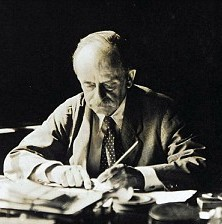
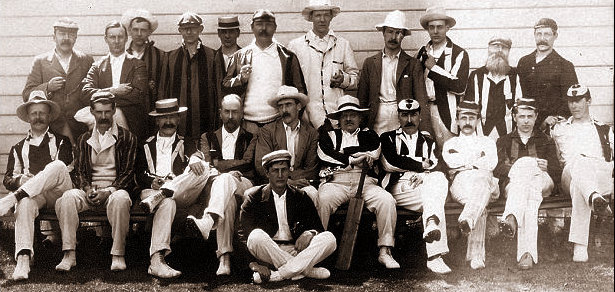
PHILIP ALBERT SNOW – THE FOUNDING FATHER OF FC CRICKET IN FIJI (FEB/18/2019)

“Thursday, 12 January 1956, was a notable day in the history of Fiji cricket. The West Indies team was passing through and spending a day in Suva. They very sportingly offered to play a Fiji eleven, though they had been a fortnight at sea. I was given the honour of captaining the Fiji side, and in the event, Fiji scored 91 against West Indies’ 63. Perhaps it is only fair to add that the West Indies batted after a super Fijian lunch! However, Fiji’s bowling and fielding were just too good for the West Indies. Fortunately for us, Weekes did not play, for if a single batsman had managed to stay, I am sure they would have scored freely. As it was, an excellent over from Jack Gosling, backed up by three miraculous catches, two by Harry Apted and one by Bula, removed three world renowned batsmen – Atkinson, de Peiza, and Smith.

“One of the batsmen, on his first tour, smacked a delivery at full force towards Harry Swann – a rather indifferent fielder who had been tucked away as far out of sight as possible. He very sensibly turned away, and the ball hit him a resounding smack on his behind. Clutching at his injured part, he found the ball in his hand and instead of a cry of pain, shouted, “How’s that!” Out it was and that was that. The batsman was the great Sobers – later Sir Garfield Sobers.”

  • Ratu Sir Kamisese Mara, quoted by Narell McGlusky BA (Hons) in his Doctoral Thesis entitled “The Willow and the Palm: an exploration of the role of cricket in Fiji,” submitted to the School of Humanities, James Cook University.

As is common knowledge, the spread of cricket throughout the British Empire was a consequence of the presence of British military power in the newly colonised regions. In the case of the regions comprising Melanesia in the South Pacific Ocean, the specific catalyst was the British Royal Navy. The evolution of the game to Fiji is reported to have been initiated at Levuka, on the island of Ovalau in the eastern region of Fiji, Levuka being once the capital city of Fiji.

A pamphlet of The Fiji Cricket Association informs us that the Levuka Cricket Club was formed in Jan/1874, the entrance fee being 10 shillings, and the annual Membership Fee coming to a fairly substantial £ 1 for the times. The tradition of organised cricket in these parts may be said to have begun in Feb/1874 with the arrival of a visiting Royal Naval ship, the HMS Pearl. The Levuka Cricket Club members had taken the opportunity to meet at the Royal Hotel to select a suitable team from among the members to take on the crew of the vessel in a friendly game.

The first documented cricket match in Fiji is thus reported to have taken place on 21/Feb/1874 at the Vagadaci ground, although the local team had been accustomed to practicing at the Police Parade ground at Totogo, Suva, in those days. The one sour note had apparently been struck by the nature of the wicket used, being described as being “’not the best’, one end being very bumpy and the other bad for the longstop.” There had been a happy ending, however, with the team representing the Levuka Cricket Club winning the game very convincingly, and the band of the HMS Pearl performing a parade and playing the National Anthem on the cricket ground at the conclusion of the entertainment for the day.

The Doctoral Thesis referred to above goes into great lengths about the intimate connection between the spread and development of cricket in the area and the evolving history of the British influence in Fiji, explaining that the local chiefs of the various clans of native Fijians had endeavoured to cede Fiji to British authority first in 1849 but the British had not been very keen to colonise the territory at that point of time. A second overture to the British had also failed. A third approach was made in January/1873 but was met with the same coolness on the part of the British who did not seem, for whatever reason, very keen on extending their Empire in the South Pacific region.

After these repeated attempts on the part of the Fijian people to embrace Her Majesty’s rule voluntarily, the British Government ultimately relented, albeit reluctantly, and Sir Hercules Robinson, then Governor of New South Wales, ratified the request of the Fijian people on behalf of the Crown and brought Fiji under the Union Jack on 10 Oct/1874. Robinson then proceeded to set up a local interim government before heading back to Sydney. The groundwork was now complete for the growth and blossoming of the British game in this remote corner of the earth, geographically almost diametrically opposite from the Home Country.

The Royal Navy played its part. After the Pearl, it was the turn of the Rosario, and the Dido, as the Navy vessels visited various other parts of the Fijian islands, playing cricket whenever the opportunity arose, until cricket became a favoured sport among the white population of the islands by 1877. The next important factor in the spread of cricket was the influence of Governor George William Des Vouex, a keen cricketer himself, whose gubernatorial reign in Fiji began in 1878.

Columnist Graham Davis, in an article written in 2012, recounts how the Levuka Cricket Club had played a cricket game against a team from the ship HMS Bacchantes in 1881, one member of the Navy team being the then Prince George, later to become HRH King George V. Although the scorecard of the game has been lost to posterity, perhaps providentially, it is on record that His Royal Highness had put in a rather poor performance in the game, being omitted from the team in the next fixture. In 1970, 89 years after the game, Prince Charles, the current Prince of Wales, and the great-grandson of HRH King George V, had visited the supposed patch of ground on which the historical game had been played.

It was the Governor’s first Private Secretary, the Hon JGH Amherst, who had played for the Harrow XI in his younger days, who took upon himself the responsibility of teaching the basics of cricket to the Armed Native Constabulary in the islands. Amherst, however, could not stay very long and had to leave Fiji due to health grounds. In 1883, Amherst was replaced by Edward Wallington (Sherborne XI and Wiltshire, an Oxford Blue, coach of an England captain in Lionel Tennyson, and latterly Queen Mary’s Treasurer), and cricket in Fiji received an additional boost.  Indeed, Governor Des Vouex was to later claim in his memoirs that the proper introduction of cricket to the indigenous population of the Fiji Islands had been accomplished during his tenure in the islands.

At this point in the narrative, gentle reader, let us tear ourselves away from the sunny ambience of the South Pacific islands, redolent with the pleasant salty tang of sea breezes and take a mental journey to Leicester, in the East Midlands of England, set our mental calendar to the year 1897, and follow the saga of the local Snow family.

Local census reports indicate that one William Edward Snow, son of William Henry Snow, a machinist, fitter, and general engineer, and his wife Catherine Barker Snow, nee Lewton, was born in the year 1869. After several changes of address, the family had finally arrived at Leicester. Exactly how WE Snow made his living is variously reported. One version has him fulfilling the role of a Foreman in the Leicester Tramway Department, whilst the other, more popular version is that he was a clerk and cashier in a Leicester emporium selling boots and shoes, a vocation that was anathema to his sensitive artistic soul, for he was by nature and inclination an acolyte at the altar of Euterpe, the Muse of music.

The Tramway employee or the purveyor of footwear, it seems, found fulfilment in his passion for music. Writing in his book Years of Hope: Cambridge, Colonial Administrator in the South Seas, and Cricket, his youngest son Philip Albert was to write later that the outer door of the homestead used to bear a brass plate with the legend: W. E. SNOW, FRCO, TEACHER OF MUSIC, signifying to anyone who might be interested that the gentleman named was a Fellow of the Royal College of Organists, having already swerved out his time as an Associate of the Royal College. Away from the shop or the tram tracks, WE Snow was an organist for three churches and a choirmaster, and supplemented the meagre salary accruing from his day job by taking private music lessons.

The year was 1897 and the local church bells in Leicester pealed merrily to announce the nuptials of the aforesaid William Edward Snow and Ada Sophia, nee Robinson. The newly-weds took up their residence at 40, Richmond Road, Aylestone Park, Leicester and both spent their whole lives in the city. Along the way, they raised a family of four boys, William Harold, born in 1898, Charles Percy, born in 1905, Edward Eric, born in 1910, and Philip Albert, born on 7 August/1915. Eldest son William Harold was to pass away at the age of 28 in 1926 from complications arising from a combination of pneumonia and diabetes mellitus. This is primarily the story of the youngest son, Philip Albert Snow.

Like his other brothers before him, Philip had his preliminary education between the ages of five and eleven at Beaumanor School, a preparatory seminary located on an adjoining street before going on to Alderman Newton’s School in Leicester. He played cricket for his school, receiving some valuable guidance in this respect from George Geary, the England and Leicestershire all-rounder, who was then in charge of the school nets. 

He won an open scholarship to go up to Christ’s College, Cambridge in 1934 to read History for three years. His second brother Charles, a Doctorate in Physics, and ten years his senior, was a Fellow and teaching Science at Cambridge at this time. During his time at Cambridge, Philip played cricket well enough to captain his College team, although he was never selected to represent his University, hinting that his Grammar School upbringing, rather than a Public School portfolio, may have acted as a major factor behind this. During his Christ’s College days, however, Snow played cricket for Leicestershire 2nd XI, captaining the team from 1937 and 1938.

He was elected to the Crusaders Club, recognised as a reserve team for Cambridge University, and reported to have been founded well before the Cambridge University Cricket Club itself had been in existence. He was also elected to the Hawks Club, founded in 1872, and representing the best sportsmen of Cambridge University. Election to both clubs had been made possible by the recommendation of Norman Yardley, a future captain of Yorkshire and England. Philip Snow won Half-Blues as captain of his university table-tennis team and as a member of the university chess team, one of his chess team-mates being Sir Fred Hoyle, the celebrated astronomer. He was also the elected President of the Historical Society.

The suggestion that Philip opt for Colonial Service as a career was first made by his brother Charles towards the end of his three years at Cambridge. In his autobiographical work mentioned above, Philip Snow mentions how he had to go through three separate interviews at the Colonial Office for his selection in the Colonial Administrative Service, before he was informed that his first choice of posting, Cyprus, was not under consideration any longer, being on the radar of Benito Mussolini. His second choice happened to be Fiji, about 12,000 miles away.

In due time, he received a communication from the Secretary of State for the Colonies, Mr. Ormsby-Gore (later Lord Harlech) that he had been selected as a Cadet in the Colonial Administrative Services in Fiji and the Western Pacific, subject to medical and dental fitness. This allowed him to continue for one more year at Cambridge undergoing the service-oriented Colonial Administrative Service Course, being one of six Cadets headed for Fiji.

Among his other subjects, he was required to take a crash course in Hindi and to familiarise himself with the Devnagari script. Philip Snow set off for Fiji, halfway across the globe from his homeland, in 1938, after the successful completion of his Colonial Administrative Service Course. He was to be the new ADC to Governor Sir Harry Luke, a fine cricketer in his own right.

In the 3rd week of July/1938, barely two weeks before he was to sail to the South Pacific, Snow received an invitation from Ewart Astill, who had once been the first professional cricketer to captain Leicestershire, and was now on the County Board, to perform 12th man duties for the 1st XI in their championship match against Somerset at Aylestone Park. Although his left hand was stiff from his recently taken inoculations prior to his departure for Fiji, he was delighted to accept the offer, being a natural right-hander.

Barely half an hour into the game, as Harold Gimblett and Frank Lee opened the batting for Somerset, Leicestershire fast bowler Haydon Smith could be seen leaving the ground, and the home skipper George Geary signalled for 12th man Snow to take the field. As they passed, Smith, a very close friend, winked at Snow and cheerily informed him that he was feeling ill. Snow was on the field for most of the Somerset innings, soaking in the first-class cricket atmosphere. The pleasant memories of the innocent subterfuge carried out so skilfully by Astill, skipper Geary, and friend Smith to get him on the field of play during a first-class game, would warm his heart for the four years in Fiji before he was entitled to his first long furlough.

Although there was an extant law that forbade any junior officer to marry until he had cleared all local examinations on his first posting, Snow obtained permission from a kind-hearted Governor to send for his childhood sweetheart and finance, Mary Anne Harris, more commonly known by her second name, Anne, immediately amidst the worsening War scenario. They were married on the day of the lady’s arrival and spent a week’s blissful honeymoon at Government House at Suva before being posted to the Lau archipelago.

An obituary of Philip Snow appearing in The Telegraph on 16 Feb/2019 says that Snow, recently married, and 25 years of age, found himself in charge of about 10,000 Polynesians at Lau in 1940. There was no telephone in those days and the only means of communication with the outside world was a monthly boat service. The young Cadet, new to the Service, was completely on his own. As the official representative of the Crown, Snow was the Wrecks Commissioner, as well as being responsible for the welfare of the local population, and the apprehension, trial, and, if required, their incarceration when they deviated from the straight and narrow. Being easy-going people themselves, the Snow family were soon on friendly terms with the locals, integrating well with them, and the social divide between the natives and the young British couple was soon banished.

Philip Snow spent the dark days of World War II posted at Suva and was required to awake well before dawn to supervise the fortification and defence of Nadi airport on the western side of Viti Levu after the Japanese bombed Peral Harbour in a dawn attack on 7 Dec/1941. Immersing himself in the social whirl and in all the local sporting activities, Snow was surprised and pained to find that the expatriate Europeans and Kailoma (part-Europeans) played their cricket separately from the itaukei (native Fijians) and the Indo-Fijians. Snow took upon himself the responsibility of integrating the races on the sports fields.

Despite some initial murmurings for the white expatriates, Snow founded the first multiracial sporting body in the Fiji, with the exclusively European Suva Cricket Club soon becoming the Suva Cricket Association, the very first racially integrated sporting body of any kind in the Fiji Islands. One of the young stars of the newly formed cricket organisation was Ratu (Fijian chief or Noble) Kamisese Mara, mentioned above, a quick bowler of exceptional merit who would later play first grade cricket for Otago, and become the first Prime Minister of Fiji upon their independence in 1970.

At the time of the Pearl Harbour incident, Snow was serving in the capacity of Government Liaison Officer at Suva and was joined for a short while by his second brother, Charles Percy, the well-known novelist, later to become a Member of Parliament and to be elevated to the Peerage. As his stature in the service grew, Philip Snow wore many hats and was a Commissioner, a Magistrate, the Officer in Charge of the Police, the Superintendent of Jails, a Receiver of Wrecks, a Colonial Secretary, and, of course, a cricketer. In addition, the young man carried in his mind a healthy curiosity about archaeology and about the anthropology of the Pacific islanders.

One factor that Snow had in his favour while mentoring the local talent in cricket was the remarkable dexterity and nimbleness of foot among the native population which accounted for their exceptional speed and accuracy in the field. Probing this attribute of the natives, Snow came to know of a traditional native game called veimoli, an indigenous ball-game played between two contestants who would be required to stand about 25 feet apart, armed with hard, unripe oranges. They would then hurl the oranges alternately at one another, victory depending on the agility of the contestants in avoiding the missiles.

Cricket rapidly became a favoured sport in Fiji, thanks to the coaching and the encouragement of Snow, with both the indigenous and the expatriate populations joining in whole-heartedly. Thus, we find an old scorecard of a 2-day game played at Churchill Park, Lautoka between a team representing Fiji and a team of the New Zealand Forces, played on 4th and 5th April/1942. In a drawn game, Fiji had totals of 126 all out and 86/6 declared, whilst the NZ Forces could only manage 22 all out and 138/9. One Amenayasi Turaga bowled exceptionally well for the home team and had figures of 6/15 and 3/47.

In Real International Cricket: A History in One Hundred Scorecards, author Roy Morgan says that Snow’s enthusiasm in formulating a proper organisational structure for cricket in Fiji led to the formation of the Fiji Cricket Association in 1946. One of the earliest major assignments of the newly-formed Cricket Association was the 1948 New Zealand tour, an extremely ambitious project, given that there were less than 500 active cricketers in Fiji at the time.

Wisden, the trusted repository of much of the knowledge knowledge pertaining to cricket, in an article written by Philip Snow in 1974, shares interesting information about cricketing encounters on the occasions when the Fiji Islanders have toured foreign lands, the account going back to 1895. Before we embark with the present Fiji squad on their 1000-mile sea voyage to the distant land of the Maori, it may be worthwhile to review the history of the international tours that the Fijians had been fortunate to undertake prior to this point of time.

1895 – This was the first Fijian cricket campaign to a foreign land, and was accomplished by a team led by JS Udal, an MCC player and an Attorney-General from 1890 to 1900, and his deputy, Sir Henry Scott. The team, comprising 7 Europeans and 6 Fijian chiefs had toured New Zealand, winning 4 games, drawing 2, and losing 2, a fine overall performance by a team during its first international exposure to cricket.

1907-08 – In an unprecedented adventure of enthusiasm and courage, a team from Mbau Island in central Fiji, reported to be no larger than Lord’s in total area, and with a male population of about 60, had made a trip to Australia, about 2,000 nautical miles away, playing against established cricketers from New South Wales, Queensland, South Australia, and Victoria. Against this level of opposition, the Islanders had conducted themselves very honourably on the field and had won 5 games, drawn 16, and lost in 5 matches.

Between 2 Feb/1948 and 6 Apr/1948, the touring Fijian cricket team played a total of 17 matches in New Zealand, five 3-day games, eleven 2-day games, and one single-day game. The 17-member Fijian team (including Manager JW Gosling), comprising 6 Europeans (and part-Europeans) and 11 Fijians arrived at Auckland on 4 Feb/1948. Commenting on the visiting Fiji team, the Cairns Post, reporting from Auckland on 5 Feb/1948, quoted slipper Snow as saying: “none of the Fijians bowled slowly because they considered such a style ‘rather effeminate’.” On the tour, the indigenous members of the team played bare-feet and dressed in their traditional sulus (cotton side-split sarongs from the waist down). The Europeans, of course, played in their traditional cricket creams.

The Fijians played their first 3-day game against the first-class side Auckland at Eden Park from 13 Feb/1948. For the record, it must be stated that the Auckland team contained several Test cricketers in Don Taylor, Verdun Scott, Merv Wallace, Ces Burke, and left-arm fast-medium bowler Don Cleverley, who had played 2 Test matches 14 years apart. Auckland won the game quite handsomely by 168 runs, Test Wallace scoring a century (108) in a 1st innings total of 340 all out.

The Fiji 1st innings amounted to 143 all out, made possible by IL Bula, the man with one of the longest names in cricket history, with his full name reading an imposing and unpronounceable Ilikena Lasarusa Talebulamainavaleniveivakabulaimainakulalakebalau, but fortunately shortened to Bula, who scored 44, forging an 80-run 3rd wicket stand with George Cakobau (33), the tour vice-captain. Although Bula chipped in with 36 in the 2nd innings, and skipper Snow scored 7 and 3*, the visitors were no match for the more experienced Auckland team.

The match against Wellington began at the Basin Reserve stadium on 27 Feb/1948. Trevor Barber, later to play 1 Test for New Zealand, won the toss for the home team and chose to bat first. The innings was over in 73.3 (6-ball) overs, the total reading 124 all out. There were 3 men in the 20s, opener Eric Tindill top scoring with 26. Left-handed batsman and occasional wicketkeeper, Tindill was born in Dec/1910 and passed away in Aug/2010 while in his 100th year. Apart from his exceptional longevity, he holds the unique distinction of not only representing New Zealand in Test cricket and in Rugby Union Tests, but also umpiring in both cricket and Rugby Union Test matches, a double-double honour absolutely unprecedented in international sport.

When the first day’s play ended with Fiji scoring 132/6, 256 runs had been scored off 127 overs in the day, and Cakobau was unbeaten on 43. Earlier in the day, the Fiji right-arm fast-medium bowler Savu Viliame had returned figures of 26.3-11-34-6, an outstanding performance for a man relatively new to the game. Of the Fijian 1st innings total of 171 all out, vice-captain Cakobau’s contribution was 67*, the next highest score being wicketkeeper and opener, Patrick Raddock’s 27.

The second day’s play produced 301 runs from 123 overs, and ended with Wellington scoring 262/7 in their 2nd innings. When the innings ended on 293 all out on the last day, the visitors were left with a winning target of 247 runs. After Raddock, who had received a hand injury keeping wickets on the second day, and had been replaced by Cakobau behind the stumps, was dismissed for a duck, the 2nd wicket realised 74 runs before the other opener Harry Apted (32) was sent back. When the 3rd, 4th, and 5th wickets all fell in rapid succession at the total of 161 after an 85-run 3rd wicket partnership between Bula (88) and Cakobau (38), there would have been worried looks in the Fiji dressing-room.

At the fall of the 9th wicket at 228, the Fijians still wanted 19 runs to win. The cool temperament of Maurice Fenn (25*) and last man Savu Viliame (14*) carried the total to 250/9, resulting in a 1-wicket victory for the Fijians. The 3 leg-byes and 3 no-balls conceded in the innings by Wellington also helped their cause. This was the first victory by the visitors against a first-class team in a match played over 3 days, and was a landmark event for the Fijians on the tour. In passing, it must be mentioned that the only established Test cricketer in the Wellington line-up in the game was Tindill, as mentioned above, although they had some others who would play Test cricket later.

The match against Canterbury was played at Lancaster Park from 5 March/1948. Led by the bespectacled Test player Walter Hadlee, the Canterbury team had in their ranks another Test cricketer in Brun Smith, and two more players, Gordon Leggat and Tony MacGibbon, who would be wearing the black cap with the silver feather within a short time. Canterbury batted first and ended the first day at 421/9, the players going in when Clifford Snook (43) was dismissed off the first ball of the 115th over.

The highlight of the day had been Walter Hadlee’s century (102) and his 5th wicket stand of 109 runs with all-rounder Tony MacGibbon (78 scored in quick time, and replete with 9 fours and 1 six). It was a long day of toil for the 7 Fiji bowlers employed, but Logavatu, Fenn, and skipper Snow picked up 2 wickets each. The Fiji 1st innings total came to 276 all out from 72.3 overs with the top half of the card doing fairly well, and Bula top scoring with 63. Skipper Snow played a patient knock of 28 in 2 hours and 15 minutes. The second day ended with Canterbury scoring 123/6 in 41 overs.

Canterbury declared their 2nd innings at 209/8. All-rounder Peter O’Malley (72) was the 7th man dismissed, the total reading 183 at the time. For Fiji, Maurice Fenn not only captured 4/101, but also ran out 2 batsmen. The visitors were left with a victory target of 355 runs and an injury to a vital player to ponder over. However, Canterbury skipper Walter Hadlee, and umpires Basil Vine and Vic Taylor very kindly allowed the Fiji 12th man, Petero Kubunavanua to substitute the injured Logavatu and to bat in his place.

Fiji were soon 7/2, with opener Raddock (1) and skipper Snow (0) back in the pavilion, and no one was prepared for what was to follow. Coming in at # 4, Bula was at his majestic best with an innings of 120 in 140 minutes, with 14 fours and 2 hits for six. The home skipper was forced to employ 7 bowlers to withstand the onslaught, whilst the crowd kept up the exhilarated chant of “Boo-lah! Boo-lah!” Opener Apted contributed 55, but, in the end, the total of 318 all out was not enough and Canterbury won the match by the relatively small margin of 36 runs. At this stage of the tour, the Fiji team had lost 2 matches and won the game against Wellington. They still had two more 3-day games to play, against Otago, and a return game against Auckland.

Carisbrook, Dunedin, was the venue of the next major engagement of the touring Fiji team, against Otago, from 13 Mar/1948. Led by the veteran left-handed batsman Lankford Smith, the home team had in Les Watt and Noel McGregor two potential Test cricketers who would be representing New Zealand in the years to come. Batting first, the Otago innings unfolded in rollicking fashion, the 50 coming in 39 minutes and the 100 being raised in five minutes under 2 hours. Although none of the batsmen made a large score individually, the total reached 217 all out in 78.4 overs. For Fiji, the bowling honours went to the other Cakobau, ETT “Edward”, who captured 5/72. This Edward Cakobau, a senior player, had previously played one first-class match for Auckland in a Plunket Shield match against Otago in Jan/1931, but was turning out for his native Fiji in his first 3-day match.

By stumps on the first day, Fiji were on 140/3, with opener Apted on 65*, and skipper Snow on 23*, the runs coming in 47 overs. The innings ended on the second day at 226 all out, with Apted extending his score to 86. Skipper Snow, playing the only innings of note on the tour, scored 38. The Fijians had a slender lead of 9 runs on the first innings. Although there were 7 Otago bowlers in action, the wickets went to leg-break and googly bowler Leslie Groves (6/88) and slow left-arm orthodox bowler Lankford Smith (4/47).

The Otago 2nd innings also progressed at a frenetic pace, the 100 coming in 112 minutes, and the 200 being raised in 193 minutes. The only fifty of the innings came from the bat of McGregor (71, in 123 minutes, with 11 fours), as the total reached 251 all out. Fijian leg-break and googly bowler Maurice Fenn captured 6/99, whilst Edward Cakobau added 4/76 to his 1st innings haul.

Fiji began their 2nd innings requiring 243 runs to win the game. It was not to be, and the visitors were dismissed for 196, scored in just under 3 hours, off 60.4 overs. Otago won the match by 46 runs. The result of the series was now at 1-3 against Fiji.

The 5th and last match of the 3-day series was again against Auckland and was again played at Eden Park, play beginning on 3 Apr/1948. This time, the home team was strengthened by the presence of Test cricketer Bert Sutcliffe, one of the finest left-handed batsmen that New Zealand has ever produced, and a legend of the game. Winning the toss, Herb Pearson, the home skipper, opted to field first. On a day full of action, Fiji were bowled out for 129 in 55 overs, none of the batsmen reaching an individual 25. The wickets were shared by Don Cleverley (3/30), Ces Burke (3/35), and Francis Hemmingson (4/35).

Sutcliffe led the way for the home team with 67 from 81 balls at the top of the order, the next highest scorer being the skipper Pearson with 26 as Auckland declared their innings at 181/8, scored in 76 overs. Fenn (5/81) bowled exactly half the overs. When Fiji began their 2nd knock 52 runs in arrears, it was opener Apted who led the charge with a well-compiled 97. There were good contributions down the order, with Bula scoring 56 with 6 fours. Middle order batsman Kaminieli Aria scored a rapid 46 from 45 balls with 5 fours and 3 sixes. Fiji felt confident enough of their bowlers to declare at 351/7 leaving the home team a winning target of exactly 300 runs.

Although Sutcliffe waged a spirited battle at the top of the order with a valiant 97, the rest of the team could not provide him the desired support. Auckland were bowled out for 184, Fenn bowling through the innings to capture 6/94 to go with his 5 wickets in the 1st innings. Logavatu’s figures read 4/46 as Fiji won the match by the substantial margin of 115 runs. With a score-line of 2-3, the Fijians had not disgraced themselves. Indeed, the 1948 New Zealand was to be a very significant landmark in the evolving history of cricket in the Fiji Islands.

In Bula, the Fijians found a true champion, the first player of international reputation to come out of the islands, and a wonderful crowd-puller wherever he played cricket. Snow estimates that he had scored in excess of “1000 runs with soaring straight drives of real majesty” on the 1948 New Zealand tour. The stand-out performer with the ball for Fiji was Maurice Fenn with over 100 wickets on the tour from his 700 overs bowled, “bowling slow in-swingers with only one off-side fielder.” For many years, there was a notion among the cricket cognoscenti of New Zealand that the 1948 Fiji team had easily been the best all-round squad to visit New Zealand from the Republic.

The tour vice-captain, George Cakobau, otherwise known as Ratu Sir George Thakombau, later became Fiji’s first Governor-General after the country became independent. Ratu Edward Cokabau, otherwise known as Ratu Sir Edward Thakombau, who was later a commander of the Republic of Fiji Military Forces, was to father a president of the Republic in Ratu Epeli Nailatikau.  Snow states that the player whom they had missed most on the tour was Ratu Edward Kamisese Mara, then completing his studies at Oxford, where an injury prevented him from winning his cricket Blue. As Ratu Sir Edward Kamisese Mara, he was to later become the first Prime Minister of independent Fiji.

Having spent 14 idyllic years in Fiji, and filling the post of Assistant Colonial Secretary since 1949, Philip Snow resigned from his Colonial service and returned to England in 1952 to accept an appointment as Bursar of Rugby School. He spent his next 24 years at Rugby and had the honour of organising the Queen’s visit to the well-known school during the 400th anniversary of the famous seminary in 1967.

During this period of his life, he wrote a number of books, including an autobiographical work entitled Years of Hope: Cambridge, Colonial Administrator in the South Seas & Cricket, already referred to above. Some of his other works include Stranger and Brother: A Portrait of C.P. Snow , written about his second brother, Baron Snow, The Fall of Hong Kong: Britain, China, and the Japanese Occupation , People from the Horizon: Illustrated History of Europeans Among the South Sea Islanders in collaboration with his daughter Stefanie Waine, and A Time of Renewal: Clusters of Characters, C.P. Snow and Coups , Best Stories of the South Seas, among others. In addition, he became a regular contributor to the Daily Telegraph and the Dictionary of National Biography.

Having retired from service, Philip Snow settled down first in Sussex, later shifting to Hertfordshire. While he never went back to the South Seas, he always kept open house for any visitors from his previous haunts, and always kept his interest in Fijian cricket alive. In 1965, when the Imperial Cricket Conference metamorphosed to form the International Cricket Council, Fiji, Ceylon, and the United States of America were the first non-Test playing countries to be admitted to the forum, along with the Test-playing countries, a development for which Snow could very rightfully feel proud.

An elected Honorary Life Member of the MCC, and also as the Permanent Representative for Fiji on the ICC panel, a post in which he remained for a record 30 years, he launched a concerted campaign at Lord’s to have New Zealand acknowledge the fact that the five 3-day games that his Fiji team had played against the first-class teams of New Zealand on the 1948 tour were, in fact, first-class games. It took him 40 years of diligent persistence to achieve his goal, and when the official confirmation of his dream materialised in 1989, he found himself ranked as a first-class cricketer at the age of 74.

Philip Snow was appointed MBE in 1979 for his services to cricket in the Queen’s Birthday Honours list, and OBE in the 1985 Queen’s Birthday Honours list. He was awarded the Fiji Independence Silver Jubilee Medal in 1995. His wife of 65 years passed away in 2005, leaving their daughter Stefanie to take care of her nonagenarian father.

In his later years, Philip Snow thought it fit to write to Wisden on two separate occasions enclosing his biography for the benefit of whoever would later write his obituary. He used to nurse one very fond wish in his heart, that Wisden would one day publish his obituary as they had published his second brother Charlie’s (Lord Baron Snow, the eminent writer, scientist and occasional amateur cricketer), and his third brother Eric’s (the Leicestershire cricket historian). Well, a brief Obituary did appear in the 2013 Edition of The Shorter Wisden after he passed away peacefully on 5 June/2012, in his 97th year.

Pradip Dhole.

BILL HOWELL AND THE BEST FC FIGURES BY AN AUSTRALIAN BOWLER (FEB/08/2019)

The chronicler wishes to acknowledge a debt of gratitude to Russell Jackson for information used in this narrative from Jackson’s article Australian cricket’s baggy green cap – a journey through its rich history. In his article, Jackson traces the fascinating story of the origins of the iconic “baggy green” so intimately associated with the Australian cricket ethos.

Jackson says that on Dave Gregory’s 1878 Australian tour of England, team members had used headgear that had been azure blue in colour and brimless in design. Members of Billy Murdoch’s 1880 team to England had sported bizarre magenta and black caps, and during England’s first home Test match at The Oval in 1882, Billy Murdoch’s Australians had been seen in caps with a red, black, and yellow motif, in keeping with the colours of the 96th Regiment.

It had been back to a demure blue for the touring 1893 and 1896 Australian teams. Interestingly, during the home Tests in the intervening period between the 1893 and the 1896 tours, the Australians had been seen wearing caps in the colours of whichever colonial cricket association would be hosting the different matches, in other words, there had been no uniformity in the colours of the headgear.

Things had changed in 1899 with Australia’s first 5-Test match tour of England. Major Ben Wardill, then Secretary of the Melbourne Cricket Club, and the principal financer for the tour, had introduced an element of uniformity with a green and gold colour scheme for the team attire, so as to give the team members a national identity, rather than the appearance of being club members.

Between 1899 and 1920, Australian team members would be seen using green and gold skull-caps with visors, as seen in the famous photograph of Victor Trumper jumping out to drive at The Oval in 1902, the snapshot having been taken by the cricketer-turned photographer George Beldam, and acclaimed as being one of the most easily recognizable cricket images in history.

The “baggy” element seems to have been introduced during the 1921 England tour under the leadership of Warwick “Big Ship” Armstrong, the first of the great steamrolling Australian teams to tour England. Since then, the “baggy green” has always been a symbol of the Australian cricket philosophy. There have, of course, been minor variations in the design over the years, the cap for the 1934 tour, preserved at the Melbourne Sports Museum, appearing to be slightly less “baggy”’ than usual.

Moving ahead in history, there have been 3 highly successful and successive Test captains of Australia who have done much to preserve and enhance the aura and rituals surrounding the “baggy green”, the sequence beginning with Mark Taylor. During the 1994/95 England tour of Australia, Taylor made it a point that all the Australian team members would be seen in the “baggy green” during the first session of fielding.

Steve Waugh, a keen student of cricket history and steeped in the traditions of Australian cricket, sought the help of historian Gideon Haigh and cap manufacturers to design a cricket cap resembling the visored skull cap of the Jardine era, and insisted on all the team members taking the field with the official cap on. The practice found another champion in the next Australian captain, Ricky Ponting.

There was another custom that the senior Waugh brother brought about in Australian cricket, a custom that was soon followed all over the cricketing world. Recognizing the immense contributions that all past Australian cricketers towards the history of the game, Steve Waugh formulated of a system of awarding “cap” numbers to all Australian Test cricketers, irrespective of the era, many of the numbers being awarded retrospectively. Thus, the deceased Australian opening batsman Charles Bannerman, who had taken first strike in the first Test match of all at Melbourne on 15 March/1877, was awarded the # 1 status.

This is the story of the holder of Australian “baggy green” # 77, and begins at Castlereagh, a suburban town under the jurisdiction of the city of Penrith, about 67 kilometers north-west of the central business district of Sydney. The township owes its name to Major-General Lachlan Macquarie, Governor of New South Wales from 1810 to 1821, who in December/1810, had named the town in honour of Lord Viscount Castlereagh, Secretary of State for War and the Colonies, from 1805 to 1806.

Lying in the lush valley of the Nepean River, Castlereagh has always been associated with agricultural farmland. It was in 1836 that a 2nd generation son of the Howell family of Castlereagh was born and named George. George grew up in the family farms and became a diligent farm-hand. The year 1863 brought about a major change in the surrounding area when Penrith was added to the New South Wales railway map, Penrith rapidly becoming the 3rd largest railway depot in New South Wales. Many of the local householders became part of the railway system in one way or another, and George Howell, a man of average height and of average build and abundantly mustachioed, is seen in an old sepia photograph standing rather self-consciously at the extreme end of the last row.

George Howell married Hannah-Anne, the 8th daughter of William James George Colless, and one of 23 siblings, in early 1869, at Castlereagh. The couple had 8 children, 4 sons, and 4 daughters. Their first-born was a son, born on 29 Dec/1869, and they named William Peter. The boy was popularly known as Bill.

Bill Howell grew up on the farmland that had been in the family possession for three generations, working in the fields alongside his father, his uncles, and his siblings. His robust outdoor life resulted in his becoming tall, strong, broad-shouldered. He indulged in the local outdoor sports of rowing, rugby union, and cricket.

He was lucky to come under the influence of an uncle, Edwin Evans, a right-arm fast-medium bowler playing for the New South Wales team, with the ability to break the ball back into a right-handed batsman. Evans had played 6 Test matches for Australia between 1881 and 1886, and was renowned for his ability to land every delivery exactly where he wanted. Howell learned the rudiments of cricket under the gentle tutelage of his uncle by marriage, Evans, in his home town in the Nepean valley.

When an English touring team under Lord Sheffield, and captained by Dr WG Grace toured Australia in 1891/92, a cricket match was organized by one TR Smith on a ground specially prepared locally for the purpose, on 16 and 17 Feb/1892 between 23 of Nepean and 12 of the visitors. When Howell picked up 5/51 in the drawn game, his victims including skipper WG Grace, he was awarded a trophy, donated by the Nepean Times, for this bowling feat, being the best performance by the home team bowlers. Around this time, Howell captured 10 wickets for 10 runs in a local game against Kingswood, and hit 7 sixes in a 7-ball over, enhancing his reputation by the day.

Howell’s performances in local games resulted in his being included for a country week in 1894, during which his performances warranted his being selected for the combined country team against a city side. It was shortly after this that Howell found himself playing for New South Wales.

The 25-year-old Bill Howell made his first-class debut playing for New South Wales against the visiting Andrew Stoddart’s XI at the Sydney Cricket Ground from 23 Nov/1894 in what had been scheduled as a “timeless” match, being selected in the team primarily for his left-handed batting skills. Charles Richardson won the toss for NSW and opted for first strike, NSW going in at 244/5 at the end of the day, with a splendid century by Frank Iredale (133) and his 126-run 3rd wicket stand with opener and skipper, Richardson (48), making the total possible.

The NSW 1st innings gradually fell apart after the departure of # 5 batsman, Harry Donnan (37), and the innings ended the next day at 293 all out, Howell contributing 16 from the middle order. The match notes state that the innings had lasted 350 minutes, while 133.3 (6-ball) overs had been sent down. For the Englishmen, Bill Lockwood (4/90) and Bobby Peel (3/75) were the main wicket takers.

The Englishmen replied with 394 all out, John Brown (117) scoring a century, and sharing a 3rd wicket stand of 107 runs with skipper Stoddart (79), followed by a 116-run 4th wicket stand with Bill Brockwell (81). The story goes that as the 3rd wicket partnership was in progress, and the home captain appeared to be running out of ideas, rookie Howell had approached the skipper with the suggestion that he be given a bowl because he felt “he could bowl that chap” referring to the England captain, rather a bold suggestion coming from a debutant, and accustomed to playing for country teams.

It was almost as an afterthought that Richardson decided to bring on Howell at # 6 in the bowling sequence. At the end of the England innings, debutant Bill Howell returned figures of 25.5-9-44-5, making good his prophesy to his skipper, with all 5 of his victims, including Stoddart, being bowled. Edwin Evans would have been a proud man that day in the thought that his protégé had announced himself in no uncertain terms, and that another purveyor of right-arm fast-medium bowling had been launched under NSW colours. Over the next 3 seasons, Howell continued to hone his skills and to enhance his reputation.

NSW were shot out for 180 in the 2nd innings, with only Syd Gregory (87) reaching a fifty. Bobby Peel added 5/64 to his 1st innings tally of wickets. The match ended on the 4th day with a resounding 8-wicket victory for the Englishmen. Howell, however, sealed his place in the state side for the rest of the season.

The authorities of the Melbourne Cricket Club and the Sydney Cricket Ground combined to arrange for the 11th Test-playing tour by an English team to Australia in 1897/98, the English team touring under the leadership of Andrew Stoddart. The visitors assembled at Adelaide by the end of December/1897, later travelling by train to Sydney for the 1st Test.

On 8 Dec/1897, skipper Stoddart received the melancholy news of his mother’s passing away in England, and although he did not return home, he was overcome by a phase of depression, missing the first 2 Test matches, and Archie MacLaren of Lancashire deputized for him for these 2 Tests. It rained for 10 continuous days at Sydney, planting doubts about the feasibility of the 1st Test being staged at all. However, play began on 13 Dec/1897, and England won the Test by 9 wickets. Alas, this was to be their only Test win on the tour, Australia winning the other four encounters by handsome margins.

When rival skippers Harry Trott of the home team and “Drewy” Stoddart of England, now leading the team again, went out for the toss on the Friday, 14/Jan/1898, for the 3rd Test of the series at Adelaide, there was going to be only one debutant in the Test match, the 28-year old, Bill Howell representing Australia, and sporting the handlebar moustache that was to become his trademark. Howell was not to know it then of course, but his debut Test cap would be attributed the number 77 retrospectively.

The extensively researched Test database of Charles Davis informs us that Trott won the toss that day in front of about 10,000 spectators, and that Charlie McLeod and left-handed Joe Darling opened the Australian batting. The first day’s play produced 302 runs for the loss of 2 wickets in about 5 hours. Joe Darling went in undefeated on 178 runs with 26 fours, 2 fives, and 1 six. Syd Gregory was the other not batsman on 16*. Earlier in the day, the 1st wicket had produced 97 runs and the 2nd wicket stand between Darling and Clem Hill, both left-handers, had added 148 valuable runs in only 98 minutes.

The Australian innings ended on the 3rd day at 573 all out, Darling being dismissed for his overnight score of 178. There were only 2 scores in single digits in the innings, and last man in Howell contributed 16 runs. There were 22 runs in the Extras column. Syd Gregory (52) and Frank Iredale (84) scored fifties. Two of the 8 England bowlers conceded more than 100 runs, Tom Richardson, the right-arm Surrey fast bowler taking 4/164 runs from his 56 (6-ball) overs. Opening the bowling with Richardson, Johnny Briggs had 1/128 from his 63 overs.

At stumps on the 3rd day, England were 197/6, with Yorkshireman George Hirst batting on a round 50* and skipper Stoddart undefeated on 11. Hirst was ultimately the last man dismissed, for an individual score of 85, made in 200 patient minutes, and containing 11 fours. The England 1st innings produced a total of 278. Leading the Australian attack in his debut Test, Bill Howell had figures of 4/70 from his 54 overs. Sydney dentist Monty Noble took 3/78. England were forced to follow on, the relevant law of the times making it mandatory when the difference between the two 1st innings totals was in excess of 150 runs.

At stumps on Tuesday, 18 Jan/1898, England were 161/4 in the 2nd innings, the not out batsmen being Archie MacLaren on 70, and Frank Druce yet to open his account. The notable aspect of the England 2nd innings up to this point had been the 142-run 2nd wicket partnership in 147 minutes between KS Ranjitsinhji (77) and MacLaren.

England added a further 121 runs on the last day of the Test, 54 of the runs coming from the blade of MacLaren, whose magnificent century (124) was compiled in just upwards of five and a quarter hours of grit and determination, and was punctuated by 11 fours. Druce and Stoddart contributed 27 and 24 runs respectively. For Australia, Monty Noble had 5/84, making it 8 wickets in the match. Matching Noble wicket for wicket was McLeod, with figures of 5/65. Australia won the 3rd Test by an innings and 13 runs to make it 2-1 for the series going into the 4th Test at Melbourne.

Bill Howell was to play 18 Test matches for Australia between the 1897/98 and the 1903/04 seasons, 16 against England and 2 against South Africa. He scored 158 Test runs at 7.52 with a highest of 3, and captured 49 wickets at 28.71, with a best performance of 5/81, his only five-wicket haul.

The 1899 Australian tour to England, their 9th Test-playing tour of England, was arranged under the auspices of the Melbourne Cricket Club, with the Secretary of the club, Major Ben Wardill, acting as the Manager. Harry Trott, being indisposed, was not selected, and the duties of captaincy devolved on Joseph Darling. The squad had initially consisted of 13 selected players, each to be paid a sum of £ 700 for the entire tour. Bill Howell was about to make his first England tour.

Young Victor Trumper was a late choice following his sterling performances in the 3 “Trial” games for the Rest against the selected Australian touring team. Trumper was added to the squad as an assistant to the Manager for a consideration of £ 200 for the tour. It is on record, however, that skipper Darling was to later insist on his emoluments being upgraded to the £ 700 due to the other members. The Australian tourists reached England in the last week of April/1899.

It was a Monday, the 15th of May/1899, and Bill Howell was about to play his first first-class match in England, the opponents being a very strong Surrey side, and the venue being the historic Kennington Oval, often referred to as The Oval. Kingsmill Key of Surrey won the honours for the toss, and Surrey took first strike, with Bobby Abel and Bill Brockwell taking guard. There was no hint of the drama that was to follow when the first wicket fell at 39, or even when the second wicket tumbled at 59, the first two batsmen on the card both being bowled. After the third wicket went down at 81, the next 7 wickets fell in a heap for the addition of another 33 runs.

It was a clean sweep by Bill Howell, who returned figures of 10/28, 8 of his victims being bowled, one caught and bowled, and one man being caught by skipper Darling. Howell’s figures of 10/28 are still the best ever by any Australian bowler in first-class cricket, and the first 10-wicket haul in an innings by any bowler representing an Australian national team in England.

Howell added 5 more wickets to his tally in the 2nd innings while conceding 29 runs, giving him match figures of 15/57. He was to improve upon these figures in South Africa, but more of that later. Jack Worrall, one of the Australian opening batsmen on the tour, was to write in The Australasian in later years: “On that day he did everything possible with the ball. He came back, swung away, made pace, and sent down his yorker with deadly effect.”

From the archives, it is seen that there have been 10 Australian bowlers who have captured all 10 wickets in a first-class innings till date. The chart given below shows their respective best bowling feats in chronological order. Even in this exalted list, Bill Howell stands out for the parsimony he has shown while capturing his 10 wickets in the innings, and it is worth noting that his record has endured over the last 120 years. Of the bowlers listed, Sam Woods and Albert Trott have played first-class cricket for English teams, and Frank Tarrant, an itinerant cricketer, has been known to play first-class cricket in England and India.

Bowler Figures For Against Venue Season
G Giffen 10/66 Australian XI Combined XI Sydney 1883/84
SMJ Woods 10/69 Cambridge University CI Thornton’s XI Cambridge 1890
WP Howell 10/28 Australians Surrey The Oval 1899
AE Trott 10/42 Middlesex Somerset Taunton 1900
FA Tarrant 10/90 Maharajah of Cooch Behar’s XI Lord Willingdon’s XI Poona 1918/19
AA Mailey 10/66 Australians Gloucestershire Cheltenham 1921
CV Grimmett 10/37 Australians Yorkshire Sheffield 1930
TW Wall 10/36 S Australia NSW SCG 1932/33
PJ Allan 10/61 Queensland Victoria MCG 1965/66
IJ Brayshaw 10/44 W Australia Victoria WACA Ground 1967/68

In 32 matches on that 1899 England tour, Howell was to capture 117 wickets at 20.35, with 6 five-wicket hauls and 2 matches in which he took 10 wickets. Howell was to make two more tours to England, both under Darling. In 1902, he had 68 wickets at 17.86, and on the combined tour of England and Scotland in 1905, Howell had 62 wickets at 20.28.

There are many respected cricket historians who contend that the 1902 Australian team that had toured England under Joe Darling was arguably the strongest to visit England, given the exceptional strength of the opposition county teams and the adversity of the weather conditions throughout the tour. While it is true that the performances of Warwick Armstrong’s 1921 side and Don Bradman’s 1948 side are spoken of with awe, it must be recognized that on both the tours mentioned, the tourists had played against English teams weakened and depleted by the devastating World Wars.

There had been talk of the 1899 Australian team paying a visit to South Africa on their way back, and upon the conclusion of the English tour. Given that the majority of the 1899 Australians were still in England towards the end of Sep/1899, and that the political situation in South Africa was in a state of flux at the time with Boer War about to break out in South Africa from early October of the same year, and given that the British Army about to engage in the war had many Australians enlisted  in it, it was deemed to be politically incorrect for the Australians to play cricket in the African country in 1899.

At the end of the 1902 tour of England, however, with hostilities of the Boer War having ceased in the African country in May/1902, it was decided that the Australian cricket team would go to South Africa for a short visit on the way home in an attempt at political damage control. However, the Australian camp still had some misgivings about the safety of their players on the South African leg of the tour.

The first 2 Tests were played at Johannesburg in Oct/1902, and while the first was drawn, Australia won the second quite decisively by 159 runs. Between the 2nd and the 3rd Test matches, the Australians played their only other first-class match of the tour, against Western Province at Cape Town.

The game began on Guy Fawkes day, 5/ Nov/1899, at Newlands, with Joe Darling winning the toss and batting first. Events moved very rapidly once the game began. The Australians were bowled out for 172 in 42.1 overs, with Victor Trumper top scoring with 49 at the top of the innings. For the home team, slow left-arm orthodox bowler George Rowe (5/86) and left-arm slow-medium bowler Bonnor Middleton (5/50) picked up all the wickets.

The Western Province 1st innings lasted 22.4 (6-ball) overs and ended at 84 all out, only Percy Twentyman-Jones (33) putting up any real resistance. There were 5 ducks in the innings and the last man remained not out without opening his account. Opening the bowling for the Australians, Howell took 8/31 from his 11.4 overs, bowling through the innings. The eventful first day ended with the visitors on 52/4 in their 2nd innings. The day had produced 308 runs for the fall of 24 wickets.

It was Rowe (4/135 from his 27 overs) and Middleton (5/72 from his 21 overs) again as the Australian 2nd innings ended at 274 all out, Monty Noble being run out. The home team began their 2nd innings requiring 363 runs in the 4th innings for an improbable victory. It was not to be. Western Province capitulated to be 80 all out in 28.5 overs, only Twentyman-Jones keeping their flag flying with a defiant innings of 50, the only double-digit score in the innings. There were 5 individual ducks in this innings also. Once again, Bill Howell bowled through the innings, capturing 9/23, and making it 17 wickets for 54 runs in the match, the best first-class match figures by any Australian bowler in South Africa till date.

Howell’s 2nd innings figures included a hat-trick with the wickets of Harold Carolin, George Rowe, and Bonnor Middleton off the 3rd, 4th, and 5th balls of his last over, the first first-class hat-trick by an Australian bowler in South Africa. Earlier in the same over, Howell had taken the wicket of the home wicketkeeper Murray Bisset with the 1st ball of the over. The Western Province 2nd innings, and the match itself, ended with the 5th delivery of Howell’s 15th over, the over remaining unfinished, and Bill Howell captured 4 wickets from 5 consecutive balls.

In this match, Bill Howell became the first Australian bowler to capture 4 wickets from 5 consecutive deliveries in the history of first-class cricket. His achievement was followed very closely by the right-arm off-break bowler from NSW, Thomas Howard, who completed the same feat against Queensland at Sydney on 30 Dec/1902.

Back home from the South African tour, Howell took 9/52 for NSW against Victoria in a Sheffield Shield match at the MCG in late Dec/1902, then the best performance by any NSW bowler against the traditional rivals Victoria. This record was subsequently broken by right-arm leg-spin and googly bowler Bill O’Reilly with figures of 9/50 for NSW against Victoria at Melbourne in Dec/1933.

In a first-class career spanning 1894/95 to 1905/05, Bill Howell played in 141 matches, scoring 2227 runs at 14.84, with a highest of 128, his only century, batting at # 10 against South Australia at Adelaide in Dec/1904. He had 6 fifties and held 126 catches. Howell’s bowling fetched him 519 career wickets at 21.49, with best figures of 10/28 as described above. He had 30 five-wicket hauls and captured 10 wickets in a match 5 times.

Of Howell’s batting, the Nepean Times of 18 July/1940 says: “As a batsman Bill was noted for his vigorous hitting. In a match, NSW v England on Sydney Cricket Ground in 1898, he made 95 runs in 63 minutes.” It is said that one of the mightiest hits made at the Melbourne Cricket Ground had come from the bat of Howell against the bowling of the left-arm bowler Jack Saunders when Howell had driven the ball over the outer fence and towards the river Yarra. On been congratulated for the monstrous hit, Howell is reported to have said: “Thanks, but what if I had only got fair on to it.”

On a personal note, Bill Howell married Neva Stella Frederica, daughter of James Wentworth Hunter and his wife Sarah Amelia, on 1 March/1899 at Scots’ Church, Sydney, and raised a family of 6 children, 3 sons, and 3 daughters. It is reported that he was active in public affairs, being an Alderman of Castlereagh. His sporting activities included, in addition to cricket, his keen interest in fishing, shooting and breeding horses, one of his stable, named Legbreak, being considered to be one of the fastest of the times.

It is said that the rough and stormy sea passage back from the 1905 England tour resulted in Howell being affected by the rheumatism that was to blight his later life. In his post-retirement years, he was to suffer indifferent health. In recognition of his sterling service to NSW cricket, the New South Wales Cricket Association, of which he was a life member, awarded him a Benefit Match at the Sydney Cricket Ground in 1924, the match being well attended by a multitude of his loyal fans.

Bill Howell was about 70 years of age when he breathed his last on the Sunday, 14 July/1940, at his beloved Castlereagh residence, where he had lived all his life. His funeral took place on the next day. The head-stone of his grave was quarried from his late father’s Castlereagh estate, and among the countless wreaths placed on the coffin was one made of jonquils from the garden that his late mother had planted and cared for many years ago.

Morticians J Price and Sons prepared the coffin at their Funeral Parlour on High Street, Penrith, and William Peter Howell was laid to rest at Rockwood Crematorium and Cemetery. The service was conducted by the Rector of Emu Plains and Castlereagh, the Rev LF Newton, with family members and several past and present luminaries of NSW cricket in respectful attendance.

One of the finest tributes to Bill Howell was probably from the pen of contemporary ex-fellow cricketer Jack Worrall, who wrote: “There has never in the cricket history of Australia been a more typical specimen of the British yoeman than WP Howell. We have produced many noted country cricketers, mostly bowlers, but none more (suggestive) of the soil that Óld Bill Howell’. He was a splendid specimen of the bush, mountain, river, and farm. He was broad, tall, strong, and good-natured to a fault, always finding some good in everybody. He was a kindly soul, brimming over with good humour and love of his fellow man, though nevertheless a good judge of character….”

Pradip Dhole.

HUGH BROMLEY-DAVENPORT AND THE FIRST FC HAT-TRICK IN THE WEST INDIES (FEB/04/2019)

The story of the Davenport family takes us back in time till the first half of the 13th century, when a Roger de Davenport, Lord of Davenport, was known to have held the hereditary office of Master Serjeant of the Peace for MacclesfieldCheshireEngland in the 1250s. The Davenports has initially been residents of their seat at Woodford, but had later moved to Capesthorne Hall, Macclesfield, the property still being in the possession of the family. Several generations later, there was to be a man of the Cloth in the family known as the Rev Walter Davenport, MA from Oxford University, who was to assume the additional surname of Bromley by a Royal License dated 10 Sep/1822, the family from then on going by the hyphenated moniker of Bromley-Davenport.

Among the progeny of the Rev Walter Bromley-Davenport mentioned above was one William, born on 20 Aug/1821. This William turned out to be a model citizen, becoming a Justice of the Peace and a Member of Parliament from North Warwick besides being a Lieutenant Colonel and later, the Commanding Officer, of the Staffordshire Yeomanry.

It is reported by Neil Coley in his book Lichfield Pubs that it was in June/1884 that trouble had broken out in central Lichfield when an inebriated group of men belonging to the Staffordshire Yeomanry had stormed into the Garrick Theatre during a performance of Gilbert and Sullivan’s Princess Ida with the intention of visiting the actresses’ dressing rooms. When they had been prevented from doing so, fighting had broken out, the disturbance soon spilling out onto the street, with locals joining in the fray.

Word of the civil unrest had soon reached the ears of Colonel William Bromley-Davenport, Commanding Officer of the Staffordshire Yeomanry. In his haste to reach the trouble spot as quickly as possible, the 63-year old conscientious officer had passed away en route of a sudden cardiac arrest on 6 June/1884. The Colonel had earlier married Augusta Elizabeth, daughter of Walter Frederick Campbell, on 6 July/1858. Among the children of the couple had been four sons, the fourth, subsequently christened Hugh Richard, being born on 18 Aug/1870 at ancestral seat of Capesthorne Hall, Siddington, Cheshire.

The young scion of the old and well-respected Cheshire family was been sent to Eton College, and his cricket profile shows that he was as an active member of the first XI from June/1886 to July/1889, and was captain of the First XI in his last 2 years. A well-built lad, he gradually developed into a right-hand batsman and left-arm fast bowler. Even before he wore the mantle of the captaincy of his school team, he came to be recognised as the best Public School bowler of the 1887 season. In his 12 matches for Eton, Bromley-Davenport captured 39 wickets at 18.60, 21 of his victims being bowled and 16 caught.

Following the logical trend, the next step in the education of Bromley-Davenport was accomplished at Trinity Hall of Cambridge University, where he was admitted following his Matriculation from Eton in the Easter term of 1890. He acquired a Bachelor of Arts degree in 1893, and his Blues in cricket for the years 1892 and 1893.

Hugh Bromley-Davenport made his first-class debut playing for Cambridge University against CI Thornton’s XI at Fenner’s Ground from 12 May/1892, as one of 2 debutants in the game, both for Cambridge, the other being the right-hand batsman and slow left-arm orthodox bowler James Douglas. It was a fairly strong ‘varsity team, led by the Honourable Stanley Jackson, and having in the ranks a handful of players, including the underarm bowler Digby Jephson, who were to later enjoy fruitful careers in first-class cricket.

The opposition was strengthened by the presence of the likes of the Lancashire and Yorkshire slow left-arm orthodox bowler Johnny Briggs, in addition to skipper Arthur Webbe, the right-arm fast bowler from Middlesex, and the Australian Test cricketers Billy Murdoch, JJ Ferris and Sammy Woods.

The visitors batted first and scored 215 all out, with good hands from opener Herbie Hewett (46) and Murdoch (67*). For the undergrads, skipper Jackson took 4/44 and Bromley-Davenport had 1/53. The Cambridge 1st innings produced a total of 117 all out, Jackson contributing 53 runs. JJ Ferris had a haul of 5/25. The total was not good enough and Cambridge were invited to follow on the second day.

When the 1st wicket produced a stand of 115 between openers Robert Douglas (69) and Norman Cooper (45), the undergrads may have begun to feel a little more confidence creeping into their batting. A good all-round batting display, in which there were only 2 scores in single figures, led to a total of 368 all out at stumps on the second day. Skipper Jackson (67) scored his second fifty of the game, and Bromley-Davenport, batting at # 9, produced a robust 46*.

Requiring 271 runs for a victory on the last day of the game, the visitors were dismissed for 173, with debutants Bromley-Davenport (4/22 from his 14.2 overs) and James Douglas (3/66 from his 26 overs) both excelling with the ball to facilitate a 97-run victory for Cambridge University.

In all, Bromley-Davenport played 17 matches for Cambridge University, scoring 286 runs with a highest of the 46* from his debut game, at an average of 16.82. He took 48 wickets at 20.37, with best figures of 4/18 against the MCC at Fenner’s Ground in May/1892. Of his 48 victims, 10 were bowled and 35 caught. He played 2 matches against the traditional rivals Oxford University, one in 1892 and the other in 1893, earning his Blues for the years.

It was a Dr Richard Benjamin Anderson, FRCS, a well-known Doctor, planter, and merchant, who had been residing at Tobago for the last 23 years, who had first mooted the idea of a team of English amateur cricketers touring the cricket-playing territories of the West Indies during the winter of 1894/95. With the active assistance and encouragement of such benefactors as Lord Hawke, Lord Stamford, and Mr. Neville Lubbock, the idea was soon translated into reality when a 13-member squad was chosen under the leadership of the Middlesex right-hand batsman Robert Slade Lucas. The standard of the assembled players was thought to be of a fairly good second-class cricket team, with only 2 players, skipper Slade Lucas and Bromley-Davenport having played first-class cricket in England in the recent past.

The team was scheduled to play 16 matches on the tour in all, though only 8 of the games would be accorded first-class status. Departing from Southampton on the RMS Medway, of the Royal Mail Steam Packet Company, plying to the West Indies and South America, on 16 Jan/1895, the team reached Barbados on 28 Jan/1895. The first match of the tour, against Barbados, began the very next day.

Bromley-Davenport played in all 8 of the first-class games, scoring 212 runs at 19.27, with a highest of 91 in the second game against Barbados. He captured the most wickets for Slade Lucas’ XI on the tour, 57 first-class wickets at 10.01, with best figures of 7/17 (his best first-class bowling figures) in the first game against Demerara, when he also had 1st innings figures of 6/22 in the game. Let us examine this particular match in a little more detail.

Saturday, the 16th of March/1895 dawned bright and clear and Bourda, Georgetown, wore a festive air as the home skipper Russell Garnett and Slade Lucas went out for the toss for the scheduled 2-day game. The home team won the toss and chose to bat first. The 1st innings was all over in 37.1 (5-ball) overs, the total reaching a very inadequate 73 all out. One man, however, emerged from the debacle with his honour intact and with his head held high. Opener Majoribanks Keppel North, making his first-class debut, carried his bat gallantly for 32 runs in the melee of batsmen coming in and going out in a rush.

This was the second instance of a batsman carrying his bat in any first-class match in the West Indies, the precedent having been set by Frederick Bonham Smith, skipper of the Barbados team playing against Demerara at Bridgetown in a 2-day game in Feb/1865. Smith had scored 50* in a 2nd innings total of 124 all out. This was the first match of first-class stature ever played in the West Indies, and all 22 players were making their first-class respective debuts in the game. FB Smith distinguished himself further by also capturing 10 wickets in the match. His younger brother, Augustus, apart from opening the batting with him in both innings, also captured 8 wickets in the game.

North’s 32* was the lowest for anyone carrying his bat in a first-class match played in the West Indies at the time, and the unwanted record was to remain in force for 84 years until Tobago opener Clint Gabriel Yorke carried the record even lower with 23* in a 1st innings total of 73 all out (amazing similarity!) against North Trinidad at Port of Spain in Jan/1979.

Returning to the account of the match between Slade Lucas’ XI and Demerara, the visitors used only 2 bowlers who bowled through the innings, round-arm slow bowler Fred Bush, who captured 4/43 from his 19 overs, and Hugh Bromley-Davenport, the left-arm fast bowler, who had figures of 6/22 from his 18.1 overs. The first day’s play ended with the visitors on 94/4. On the second day, Lucas’ XI were dismissed for 119.

When the home team batted a second time, their performance amounted to a miserable 46 all out in 22.3 overs, Bush and Bromley-Davenport again bowling unchanged through the innings. Bush had 3/27 from his 11.3 overs whilst Bromley-Davenport’s figures were 7/17 (his career-best first-class bowling figures) from his 11 overs. Bromley-Davenport’s 2nd innings figures included a hat-trick, with the 5th, 6th, 7th, and 8th wickets all falling at the total of 42. This hat-trick by Bromley-Davenport was the first ever achieved in the history of first-class cricket in the West Indies.

Almost 2 years later, in a match between Barbados and Arthur Priestley’s team of visiting English amateur cricketers played at Kensington Oval, Bridgetown, from 21 Jan/1897, a 27-year old English school-teacher affiliated to the famous Harrison College of Bridgetown, and a furiously fast right-arm bowler of his day, named Arthur Somers-Cocks (another hyphenated name!), playing under the banner of Barbados, would become the first player representing any West Indian team to register a first-class hat-trick.

Back in England after the Caribbean tour in the summer of 1895, Hugh Bromley-Davenport took up a career in business, becoming a member of the London Stock Exchange, and later becoming a Stockbroker at Pyrford, Surrey, in 1911. Busy with building up a professional career at this time, he was not able to play cricket very regularly in the 1895 season, only turning out occasionally for the Gentlemen of England and the I Zingari.

Meanwhile, stirring events were taking place in South Africa. James Douglas Logan, a Scottish immigrant in the land of the veldt, and a millionaire with an enormous empire in real estate and other enterprises, was making a name for himself as one of the founding fathers of South African cricket. A man of far-reaching influence in high places, and one known to be close to the legendary Cecil Rhodes, James Douglas Logan was being spoken of respectfully in South Africa as the “Laird of Matjiesfontein.”

During one of his “home” visits in 1894, Logan sought the assistance of George Lohmann, the Surrey legend and his frequent house guest in South Africa, to arrange a meeting with Lord Hawke, an institution in himself as far as English cricket went. Logan offered financial and logistic assistance if His Lordship could arrange for an English team to tour South Africa in the 1895/96 English winter. Logan’s persuasive tongue resulted in the arrangement of the 13th English Test playing tour, and the 3rd Test playing tour to South Africa between November/1895 and March/1896.

The touring party of 14 selected players included 3 professional cricketers in fast bowler George Lohmann, slow bowler Edwin Tyler, and opening batsman Tom Hayward. Travelling by sea, the tourists assembled at Cape Town by the last week of December/1895. The tourists were immediately affected by the famous “Jameson Raid” of the Transvaal Republic orchestrated by Dr LS Jameson over the New Year and were held up at Cape Town by about 10 days. Ultimately, the English tourists played 18 matches in all on the tour, including 3 Tests, and one other first-class game.

The Irish fire-brand, and skipper of the England team, Sir Tim O’Brien, and skipper-wicketkeeper Ernest Halliwell of the home team went out for the toss on the Thursday, 13 Feb/1896 at St. George’s Park, Port Elizabeth for the scheduled 3-day Test match, the first of a 3-Test series. There were 15 Test debutants that day, 8 for England, and 7 for the home team. One of the visiting debutants was Hugh Bromley-Davenport, in the exalted company of the likes of Lord Hawke himself, Tom Hayward, CB Fry, and Ledger Hill, and three others. The number 93 was to be retrospectively attributed to Bromley-Davenport’s first England cap.

Although winning the toss, the home skipper decided to put England in to bat, and 21 wickets fell on the first day. The England 1st innings ended at 185 all out with Hayward and Fry scoring 30 and 43 respectively. Bromley-Davenport, surprisingly batting ahead of Lord Hawke, contributed 26 runs. For the home team, slow left-arm orthodox bowler James “Bonnor” Middleton, one of the home team debutants, captured 5/64, while Joseph Willoughby, making both his Test as well as first-class debut in the game, took 2/54. The England innings lasted 70.4 (5-ball) overs.

The South African 1st innings was a very brief affair, and was completed in 30.4 overs with a score-line reading 93 all out. There were only 3 men in double figures: openers Thomas Routledge (22), and Frank Hearne of Kent and the MCC, and having already played 2 Test matches for England against South Africa in 1889, top scoring in the innings with 23. The other man was skipper-wicketkeeper Halliwell (13) from lower down the order. The main wicket-taker for England was George Lohmann, bowling through the innings, and taking 7/38. Opening the bowling with Lohmann, Bromley-Davenport had figures of 2/46. The first day’s play ended when England wicketkeeper Harry Butt, opening the batting, was dismissed for a duck before any runs had been scored by the visiting team.

The Friday of the Test happened to be Valentine’s Day, always associated with varying aspects of romantic love from the time of the great English poet Geoffrey Chaucer of the 14th century. There was very little love lost between the combatants of the Test match, however, as the events of the day were to prove. The England 2nd innings realised 226 runs in 80.4 overs, with only one batsman, Australian Sam Woods (53) scoring a fifty. Middleton (4/66) was again the chief wicket-taker for the home team, supported by all-rounder Jimmy Sinclair (3/68), and by Willoughby (2/68).

That left the home team a matter of 319 runs, the highest total for the match, to win the Test. Alas, the 2nd innings of the home team lasted only 18.4 overs during which only 30 runs were scored for the loss of their 10 wickets. South Africa were to reproduce their all-time lowest Test total of 30 all out in their 1st innings against England in the 1st Test at Birmingham in June/1924. The only one in double figures was the military man Robert Poore (10), making his debut in the match. The fall of wickets column read like this: 1-4 (Routledge), 2-11 (Hearne), 3-11 (Sinclair), 4-18 (Fichardt), 5-18 (Poore), 6-28 (Halliwell), 7-29 (Hime), 8-30 (Cook), 9-30 (Middleton), 10-30 (Willoughby, 18.4 overs).

Bowling an extraordinary and unchanged spell, George Lohmann had figures of 9.4-5-7-8, his best Test figures till date. Lohman’s figures included a hat-trick in the 2nd innings with the wickets of Cook, Middleton, and Willoughby, the last 3 wickets falling at the total of 30. This was the 4th hat-trick in Test history and the 3rd Test hat-trick by an England bowler. Bromley-Davenport and Hayward picked up 1 wicket apiece as the scheduled 3-day match ended on the second day, with England winning the Test by 288 runs.

Lohmann was to improve upon his own record in the 2nd Test played at Old Wanderers, Johannesburg, from 2 March/1896. England won the Test very convincingly by an innings and 197 runs after Tom Hayward (122) scored his maiden century, Fry (64) and Hill (65) propped up the middle order, and Bromley-Davenport executed the coup de grace with an innings of 84 from # 9 (his highest Test score) to take the 1st innings total to 482 all out, spread over the best of 2 days.

Lohmann then achieved bowling figures of 14.2-6-28-9 as South Africa were dismissed for 151 in their 1st innings. This was the first instance in Test history of any bowler capturing 9 wickets in an innings, Lohmann also capturing his 100th Test wicket, in this, his 16th Test match collecting 3 more wickets when South Africa followed on.

In all, Hugh Bromley-Davenport played 4 Test matches for England, all in South Africa, 3 against South Africa on the 1895/96 series, and one against South Africa as part of the second tour of Lord Hawke’s XI for the 1898/99 series. He scored 128 Test runs at 21.33 with a highest of 84, as mentioned above. Bromley-Davenport’s 4 Test wickets came at 24.25.

Surprisingly, Bromley-Davenport made his Championship debut rather late in his career, while representing Middlesex against Yorkshire at Lord’s from 21 May/1896. It was not a very memorable debut for him, with scores of 6 and 0 and no wickets in a match that Yorkshire won by 10 wickets. In his 3 years with Middlesex, Bromley-Davenport played 28 matches for his county, scoring 212 runs at 18.94, with a highest of 69*, and 5 fifties. He took 15 wickets for Middlesex at 40.20 without any five-wicket hauls.

In a first-class career spanning 7 years, from 1892 to 1899, Hugh Bromley-Davenport played 76 matches, scoring 1801 runs at 18.37, with a highest of 91 for Lucas’ XI against Barbados at Bridgetown in Feb/1895. He had 11 fifties and held 48 catches. His bag of 187 first-class wickets came at 17.92, with best figures of 7/17, as noted above.

Almost 29 years old when he played his last first-class match, for Arthur Webbe’s XI against his old alma mater, Cambridge University, at his old haunt of Fenner’s Ground, from 11 May/1899, Bromley-Davenport scored 2 and 34, but took no wickets, as the undergraduates won the game by an innings and 62 runs.

On a personal front, Bromley-Davenport’s business interests in the City were taking up more and more of his time at this stage of his life. He was almost 36 years old and living at 2, Gerard Road, SW 13, when he married Muriel Coomber, CBE and JP, the youngest daughter of John Head, on 26 April/1906, the ceremony being solemnised at St. Peter’s, Pimlico. They had 2 children, Joan, born on 24 Feb/1907, and Richard Anthony, born on 2 June/1910. In later years, Muriel, a well-known social worker in her own right, was to serve as Honorary Secretary of the Invalid Comforts Fund for Prisoners in 1918, and as Honorary Manager, British Red Cross Prisoners of War Department Invalids Comforts Section, in 1944.

When World War I broke out in 1914, Bromley-Davenport was 44 years old. He nevertheless volunteered his services for the War effort and was accepted as a Lieutenant in the Special List at the Physical and Bayonet Training facility for army men being readied for combat duty. He also served with the Royal Engineers and was mentioned in dispatches. He was awarded an OBE in 1919 in recognition of his war services.

Hugh Richard Bromley-Davenport passed away on 23 May/1954, at his South Kensington residence in Middlesex, aged about 84 years.

Not many cricket enthusiasts of the present generation will have heard of the man of a bygone era with the old English double-barrelled surname. However, with the modern craze for trivia, his name does crop up now and then in cricket quizzes in a rather quaint context.

A sudden question like: “Which two Test cricketers share the longest surname in history?” is very likely to test the mettle of even the most knowledgeable trivia specialist. To learn that the two cricketers concerned had made their respective Test debuts 87 years apart may make the issue even more confusing. Well, not to tax the memory of the gentle reader any further, the pair bound by the strange quirk of nomenclature are Hugh Bromley-Davenport of England and Laxman Sivaramakrishnan of India, both with 16 letters in their surnames.

Pradip Dhole.

ROGER BLUNT SCORES THE FIRST FC TRIPLE CENTURY BY A NZ PLAYER (JAN/04/2019)

“Even if you don’t know much about cricket, you may know that a small yellow book called Wisden has been around for a while… Some in the cricket world refer to it as ‘the Bible’… You may also know that, despite being an annual publication in the age of instant comment, Wisden still has a bit of clout, which says plenty for the acumen of previous editors. Then there are the Five Cricketers of the Year, the selection of whom has been the sole prerogative of the editor since 1889, give or take the occasional break for a world war.”           
–         Lawrence Booth, Mail Online, 11 April 2012. Lawrence Booth was the 16th Editor of the Wisden Cricketers’ Almanack since the first publication of the journal in 1863.

Although the narrative begins in England, the acknowledged home of the game of cricket, it is in reality an essentially Antipodean tale. The 64th edition of Wisden thought it fit to laud the first real star of the New Zealand cricket team, then making its inaugural tour of England in the year 1927, but not playing any Test matches on the tour.

It is believed that the name of the historic city of Durham in North East England is derived from the Celtic element “dun” denoting a hill fort, and the Old Norse element “holme” signifying an island. The city is thought to have already been flourishing in 995 AD. About a millennium later, the household of the scholarly Professor TGR Blunt, Master of Arts from Christ College, Oxford, would have been celebrating the birth of a son on 3 Nov/1900. The child was later christened Roger Charles.

Roger was barely six months into his infantile life when Professor Blunt decided to emigrate to New Zealand with his family in August/1901, to fill the Chair of Modern Languages at Canterbury College in Christchurch. Blunt junior was educated at Christ’s College, founded in 1850, and often referred to as the Eton of the southern hemisphere. He played cricket for the First XI for four years, 1915 through to 1918. In his first two years, Roger played under the leadership of Tom Lowry, but captained the team himself in his last 2 years.

That Blunt junior turned out to be a keen sportsman is not surprising given that his father used to be stroke of his college boat for three years, played football for his college, and represented the County of Durham in hockey for two years, thus passing on a rich gene-pool of athletic ability to his son.

The first game of his documented cricket profile shows Blunt, a right-hand batsman and leg-break bowler, opening the batting in both innings for Christ’s College in a 2-day match against Sydenham at Christchurch from 1 Dec/1917. Although he was dismissed for 1 in the 1st innings, he is seen to have carried his bat for 37 in a woeful total of 86 all out, with 2 men absent hurt. The highlight of the game was the gargantuan effort of the opening batsman James Gray of Sydenham in remaining undefeated on 343 out of a total of 597/4 declared, and helping his side to win the game by an innings and 326 runs. It was a chastening experience for Blunt who opened the bowling and had figures of 22-2-127-1.

In a brochure of the Burnside West Christchurch-University Cricket Club, celebrating 75 years of cricket from 1905 to 1980, author BC Adams informs us that Roger Blunt had joined the club in January/1919 at a time when the first-grade team had been in the doldrums as far as their performances were concerned. Blunt’s association with the club was a fairly long one and ended in 1927. During this time, he scored 5178 runs for the club at 56.9 and captured 207 wickets at 20.4. He scored 16 centuries and headed the averages every season he played. His best season with the bat was 1924/25 when he scored 1071 runs at 97.3. His best bowling season was 1920/21, when he had 39 wickets.

BC Adams writes: “He is remembered as a slim, graceful batsman who never seemed to exert himself even when scoring at a brisk pace, and for his ability to bowl leg-breaks, an ability which had first secured his place in the Christ’s Church first XI at the age of 14…. In club cricket, he set a record by hitting seven sixes into the Hagley Park trees in the course of an eight-ball over from ER Caygill in the 1923/24 season. He went on to score 266 in the amazingly quick time of two and three quarter hours.”

History tells us that the first cricket match to be attributed first-class status in New Zealand had unfolded at the South Dunedin Recreation Ground as a 3-day match from 27 Jan/1864, with James Redfearn, the home skipper, playing the second of his 2 first class games, and the wicketkeeper-skipper of the visiting team, Henry Lance, sauntering out to spin the historical coin. Although Canterbury had won the toss, they had preferred to field first. Seventeen of the players in the game were making their first class debuts, five Otago players, brothers Christopher and John Mace, Richard Coulstock, John Jacomb, and skipper Redfearn had had experience of first class cricket from their previous stints with Victoria in the Australian domestic cricket circuit.

A later statistical reassessment of the data available for the match reveals the intriguing fact that both teams had played 6-ball overs in their respective 1st innings and 4-ball overs in their respective 2nd knocks, a bizarre turn of events, to say the least. Otago had won the first encounter by 76 runs. The rivalry between the two teams, then, had been set in motion with this very first first-class match played in New Zealand.

Roger Blunt’s first-class cricket career was launched playing for Canterbury at the Hagley Oval, Christchurch, on the Nativity Day of 1917 shortly after the schoolboy cricketer had celebrated his 17th birthday. The opposition were the traditional rivals, Otago. In an uncanny similarity with the first ever first-class game played in New Zealand, there were as many as sixteen debutants in the game, eight on each side. James Gray, the home skipper and himself a debutant, and Bill Patrick, having previously represented Canterbury but making his debut for Otago, and being nominated captain in this match, went out for the toss, subsequently won by the Otago skipper, who opted to bat.

There were four ducks in the total of 171 all out, while one man remained undefeated without opening his account. Two men scored 10 each, and it was up to skipper Patrick (107, with 11 fours and 3 sixes) to shore up his team’s hopes. Opening the bowling with his variety of leg-breaks, Blunt took 2/47 from his 16 overs. In a generally low-scoring game, the Canterbury 1st innings total also amounted to 171 all out, with Blunt opening the batting and contributing 17 runs.

The Otago 2nd innings was an even more feeble effort of 104 all out, skipper Patrick again top scoring, this time with 38. Blunt’s haul in this innings was 4/60 from his 14 overs. Canterbury won the match with a 2nd innings total of 110/5. Given that the first innings totals of both teams had been tied, and that the difference of the second innings totals had been 6, it seems highly possible that the match had ended with a six-hit from Reginald Read of Canterbury, who had remained unbeaten on 34 at the close, the other not-out batsman being Rex Booth (1*). Canterbury won the game by 5 wickets, the scheduled 3-day game being completed in 2 days.

Between 1917/18 and 1935, Roger Blunt played 123 first class matches scoring 7953 runs at 40.99, with a highest of 338*, 15 centuries, 40 fifties, and holding 88 field catches. During this period, Blunt captured 213 wickets at 31.16, with best figures of 8/99. He had 5 five-wicket hauls and took 10 wickets in a match once. His overall economy rate was 3.17.

The above career summary included 9 Test matches for New Zealand between 1929/30 and 1931/32. He scored 330 Test runs at 27.50 with a highest of 96, his only fifty. He had 12 Test wickets at 39.33 with best figures of 3/17.

Having made the grade, as it were, with Canterbury, he continued to represent the team till 1924/25, playing 27 matches and scoring 1886 runs with a highest of 174, an innings that perhaps deserves a more detailed account of the match in question.

Writing in The Evening Post of 14 Oct/1922, the “Old Collegian” had informed the readers that the English team to be led by the Lancashire colossus Archie MacLaren for the tour of New Zealand, Australia, and erstwhile Ceylon had been selected after “a lengthy session of the Sub-Cricket Committee of the MCC, which met under the presidency of Lord Harris, others present being Lord Chelmsford, Dr Russell Bencraft, Major EG Wynward, and Messers HDC Leveson-Gower and FE Lacey (Secretary).” It had been further decided that Mr HD Swan of Uppingham and Oxford, who had taken a cricket team to Portugal in 1910, and who had “recently returned from a tour of New Zealand,” would accompany the team as the Manager, and turn out himself under the colours of the MCC in an emergency.

The 14-member team was to include two professional cricketers in the prolific Kent right arm leg-break bowler “Tich” Freeman and the Lancashire all-rounder Harry Tyldesley. Interestingly, one of the MCC players was Tom Lowry, mentioned above, who was to captain New Zealand in her first 7 Test matches. Lowry was known to be a wicketkeeper and middle order batsman who occasionally turned his arm over with his variety of right arm slow-medium offerings when the occasion demanded.

Of the 8 first-class matches played in New Zealand by MacLaren’s team, the only match against Canterbury began at Lancaster Park, Christchurch, on 23 Dec/1922. Having won the toss, MacLaren sent in his openers to do the honours. The 3rd wicket fell at 60, bringing Alec Wilkinson (102, with 10 fours) and the burly 22-year old left-handed Percy Chapman, later to captain England, together. The 4th wicket produced 282 runs, Chapman scoring a masterly 183 (in 135 minutes, with 27 fours and 2 sixes). A quick-fire 60 by Freddie Calthorpe, another future England captain, allowed MacLaren to declare the innings at the end of the first day on 454/6 scored in 112 (8-ball) overs.

The Feb/1923 issue of The Cricketer, citing this innings of Chapman, queried: “Is there a better English amateur batsman at the present time? I respectfully submit an emphatic No…. I believe I can hear our Editor saying ‘Right!’ to this.” The Canterbury 1st innings was done and dusted for 181, opener Blunt scoring 13 runs. Following on, the home team reached 30 for no loss at the end of the second day, with openers Blunt on 21 and Rupert Worker on 7*.

The match notes state that the opening pair were still at the crease at Lunch on the third day, with Blunt, having added 106 runs in the session, batting on 127, and Worker on 53*. The team score at Lunch was 187 for no loss, signifying an addition of 157 runs in the first session. Blunt was finally dismissed for a brilliant 174 (in 212 minutes, with 25 fours), and the innings, which contained as many as 6 ducks, ended at 295 all out. MacLaren’s men won the match by 8 wickets.

 The Cricketer commented: “On the Canterbury side, Blunt hit a magnificent 173 (actually 174) in retaliation against MacLaren, and knowing Archie as I do to be the great sportsman he is, none would have been more pleased….. Blunt is a batsman of the first water. In 1921 he hit up 80 against a powerful Australian eleven led by Vernon Ransford, who described it as the best innings he had seen of the Australian or New Zealand side during the New Zealand tour.”

The English season of 1927 was remarkable for being the last till date, apart from the wasted years of World War II and the proposed South African tour of 1970 that was cancelled due to political reasons, when no Test cricket was played in the British Isles. Instead, a New Zealand team made a tour of the Home Country.

In the historical conclave of the Imperial Cricket Conference in 1926, the basic groundwork of spreading the Gospel of Test cricket was initiated when representatives from New Zealand, India, and the West Indies were invited to attend. The new incumbents to the ICC, later to be renamed the International Cricket Council, were encouraged to organise their domestic cricket logistics with a view to forming their individual cricket boards, as a prelude to their possible entry into the fold of Test playing nations, at the time restricted to England, Australia, and South Africa.

Filling in the Test match void of the 1927 English season was a team from New Zealand playing 40 matches along the length and breadth of the British Isles. The list included 26 first class games, the majority of them played against the first-class counties. The 14-member team was led by Tom Lowry, the Cambridge University and Somerset cricketer born at Hawke’s Bay.

Roger Blunt was one of the outstanding successes of the tour, playing in 25 matches and scoring 1540 runs at 44.00, with a highest of 131 against HDG Leveson-Gower’s XI, one other century, and 11 fifties. He also held 14 catches. His leg-breaks accounted for 77 wickets at 25.29, with best figures of 7/109 against Northamptonshire at Kettering.

His all-round performances on the tour earned Roger Blunt the accolade of the Cricketer of the Year by Wisden for the year 1928. Part of the citation went as follows: “Blunt’s reputation as a batsman had preceded him to this country, and if he did not reach three-figures in a first-class match until nearly the end of the tour, he at any rate played so well as to establish himself as one of the leading run-getters of the side. Scores of 52 and 51 in the opening first-class match against the M.C.C. at Lord’s gave clear indication of his ability, and he finished the tour in great style with 131 and 63 not out against H. D. G. Leveson-Gower’s eleven at Scarborough. He wound up with an aggregate of over 1,500 runs in first-class matches, and a total of 78 (actually 77) wickets……Those who bowled against him in this country expressed the opinion that he was one of the hardest men on the side to get out, for he followed the flight of the ball so closely that he was rarely troubled by change of pace. Anything in the nature of an overpitched ball he could hit with great power and, while he had many strokes at his command, driving was probably the best feature of his work as a batsman. His methods, sound and orthodox, were such as to encourage the belief that he will achieve even greater success in the future.”

The performance of the touring New Zealand team in England in 1927, during which they had won 13 games, was perhaps the incentive for Lord’s to think of taking the unusual step of selecting two separate teams to tour two widely separated points of the globe during the winter of 1929/30 to uphold the traditions of English cricket.

The team that toured the Caribbean Islands under Freddie Calthorpe of Warwickshire was to become the first English Test playing team to venture across the Atlantic, although the Calypso cricketers had already had their baptism in Test cricket in the English summer of 1928. On the other hand, the team that set out to tour erstwhile Ceylon, Australia, and New Zealand was to be come the first Test playing squad to tour New Zealand, and the New Zealanders were to have their first experience of Test cricket during the tour.

This was, of course, the 8th English team to visit New Zealand, the previous tours being as follows:

1863/64 – led by George Parr

1876/77 – led by James Lillywhite Jnr. This was part of the tour that saw the very first Test match being played at Melbourne between the touring Englishmen and a composite Victoria-New South Wales team that was thought to have been representative of Australian cricket. The match was played between 15 to 19 March/1877 with 18 March being the rest day.

1881/82 – organised by Alfred Shaw, Arthur Shrewsbury, and James Lillywhite

1887/88 – organised by Alfred Shaw, Arthur Shrewsbury, and James Lillywhite

Till this time, no first-class matches had been played by the visiting English teams in New Zealand. That changed with the next tour:

1902/03 – led by Lord Hawke, the first English tour to New Zealand to incorporate first-class matches

1906/07 – first English tour to New Zealand organised by the MCC

1922/23 – another tour arranged by the MCC and led by the 51-year old Archie MacLaren, the martinet of Lancashire cricket

The process of team selection began on 30 June/1929 when 14 players were invited to form the touring party. The New Zealand cricket top brass had sent a request to Lord’s that KS Duleepsinhji, nephew of the illustrious “Ranji” be included in the touring party and that either of Patsy Hendren or Frank Woolley be also included. Sussex stalwart Arthur Gilligan, the captain-designate, fell ill and withdrew, as did Frank Watson of Lancashire. Arthur Gilligan’s brother, Harold was prevailed upon to take the place of his indisposed brother and to lead the side. Maurice Allom replaced Watson, and the tour party was formally announced on 29 August/1929. The party, bolstered by the presence of the wife and daughter of Frank Woolley and the wife of Kent Batsman Geoffrey Legge, met at St. Pancras railway station, London, on 27 September, and set sail from Tilbury on the RMS Orford.

Having completed the formality of a single “Minor” game at Colombo and their engagements in Australia, the majority of the English touring party left Sydney on 6 December/1929 on the Ulimaroa arriving at Wellington on 10 December.

There was a festive air at Lancaster Park, Christchurch, on 10 Jan/1930 as the rival skippers, Tom Lowry for New Zealand and Harold Gilligan for England, went out to toss for what was to be the inaugural Test match for New Zealand. Calling correctly, Lowry sent his opening batsmen in. There were 17 Test debutants in the match, all 11 of the home side and 6 of the visiting team, including skipper Gilligan. The two Maurices, Allom and Turnbull, were about to play their respective first Test matches also.

It turned out to be a pathetic procession for the home team, dismissed for a meagre 112 in 47.1 (six-ball) overs. Right arm fast-medium bowler Maurice Allom was in his elements as he dismissed opener “Stewie” Dempster (11, the team score reading 4/21). Skipper Lowry was dismissed for a duck off the second ball he faced (5/21), the next two balls disposing of wicketkeeper Ken James (6/21) and all-rounder Ted Badcock (7/21). Maurice Allom’s 4 wickets in 5 consecutive deliveries (the first instance in Test history) included a hat-trick, the first instance of a bowler taking a hat-trick on Test debut. Allom rounded off a wonderful performance by capturing his 5th wicket later in the innings and achieving figures of 19-4-38-5, his first five-wicket haul in Test cricket.

Meanwhile, the # 5 batsman for the home team, Roger Blunt, having arrived at the crease at the total of 3/15, played a stoic and composed knock and remained undefeated on a dogged 45 at the end of the innings, forging a significant 43-run 8th wicket stand with George Dickinson (11), and a 39-run 9th wicket stand with leg-break and googly bowler Bill Merritt (19).

The first day’s play ended with England on 147/4, with Legge on 35* and all-rounder Stan Nicholls on 10*. Earlier in the England innings, Prince Duleepsinhji had played a cultured knock of 49 batting at one drop. The entire second day was lost to the elements. When play resumed on the third day, England were dismissed for 181, with wickets falling rapidly. For the home team, the most successful bowler was Blunt with his variety of leg-breaks that fetched him 3/17. New Zealand began their 2nd innings under a 69-run handicap.

There were only 3 double figure contributions in the innings, Dempster (25 at the top of the order), “Curly” Page (21), and skipper Lowry (41 in just over an hour and half). Blunt managed 7 runs in the innings, and Allom added figures of 3/17 to his 1st innings heroics, as the innings finished on 131 all out, leaving England with a victory target of 63 runs. England won the match by 8 wickets, scoring 66/2, both wickets going to Blunt. Roger Blunt played in all 4 Tests of the home series, scoring 100 runs at 25.00 and capturing 9 wickets at 19.00.

It was 1931 and the next phase of the coming of age of New Zealand cricket was about to begin with their first Test playing tour to England. Following the financial loss of their England venture of 1927, the powers that be in New Zealand cricket decided that it would be financially prudent to limit the number of tourists. With this pecuniary constraint in mind, it was decided that Tom Lowry would fulfil the duties of Manager for the tour in addition to his captaincy role and act as the reserve wicketkeeper, a rather onerous responsibility for one man. Similarly, it was decided that slow left-arm orthodox bowler Cyril Alcott would be the Treasurer for the tour.

The Selection Committee comprising Stan Brice (Wellington), Cyril Snedden (Auckland), Harry Whitta (Canterbury), and Frank Williams (Otago) made the formal announcement of the 14-man squad on 26 January/1931. Tom Lowry was named as Manager-Captain and Curly Page was designated as the Vice-Captain. The party embarked on their first ever Test tour of England from Wellington aboard the RMS Rangitata on 28 March/1931, reaching Southampton on 30 April/1931. The evergreen and legendary Bill Ferguson accompanied the party as Scorer-Baggageman.

The tourists played 14 first-class games in England from 4 May to 23 June, winning against Essex, the MCC, and Northamptonshire. They lost the match against a strong Middlesex side and drew the other 10 games. It was finally time for the fledgling Test nation to take on England in the Test match at Lord’s from Saturday, 27 June/1931.

Lowry won the battle for the toss from Douglas Jardine, in his first Test as England captain, and Jack Mills, accompanied by Stewie Dempster, set out to open proceeding under the keen scrutiny of Umpires Frank Chester and ex-Nottinghamshire man Joe Hardstaff. Bill Voce and Gubby Allen opened the England attack. Despite a solid 1st wicket stand of 58, the New Zealand team were dismissed for 224 all out in 74.3 overs. Dempster top scored with a sedate 53. Blunt’s contribution with the bat amounted to 7 runs. For the home team, Ian Peebles, the enigmatic leg-spin and googly bowler from Middlesex, later to serve on British Intelligence during World War II, captured 5/77, and another Middlesex leg-spin and googly bowler, Walter Robins accounted for 3/38.

The England reply unfolded in fits and starts, the first 3 on the card being dismissed in single figures. Duleepsinhji (25), skipper Jardine (38), and Kent all-rounder Frank Woolley (88) then shored up the innings. However, when Peebles was dismissed for a duck, England ended the first day on 190/7, with wicketkeeper Les Ames batting on 15. The ever reliable Test database of Charles Davis informs us that the first day crowd of 25,000 had been well entertained by the 130.5 overs bowled in the day, resulting in 414 runs being scored for the loss of 17 wickets.

After the repose of the Sabbath, the second day’s play resumed with the overnight undefeated batsman Ames being joined at the crease by the incoming amateur cricketer Gubby Allen, first assistant to the Works Department Manager at Debenhams, the famous Department Store of Wigmore Street, London. The alliance was to produce 246 runs for the 8th wicket, scored in 166 minutes off 441 balls and ended when Ames was dismissed caught behind for 137 (with 18 fours and 2 sixes). Allen was batting on 118 at this point. Allen’s ultimate score was 122, with 14 fours and 1 six. The England innings folded up thereafter for 454 in 134 overs, the runs coming in 330 minutes.

New Zealand began their 2nd innings 230 runs in arrears and were 161/2 at stumps on the second day, with Dempster, carrying the fight to the opposition, batting on a defiant 86* and Curly Page keeping him company with 31*. The second day crowd of about 23,000 went home on 29 June confident of witnessing an England victory on the morrow, the day having produced 425 runs for the loss of only 5 wickets in 147.4 overs of play.

In the New Zealand camp, there would have been misgivings and furrowed brows over the state of the game, the team being 69 runs in arrears still, and over the fact that England would have the opportunity to bat a second time in the match. The third day’s play would doubtless prove to be crucial for both teams. The prestige of the fledgling Test-playing nation rested on the batting prowess of their remaining batsmen in their first ever Test match at the Home of cricket.

On Tuesday, the last day of the Test, the eager crowd began to filter in early until they numbered about 23,000. Dempster and Page began cautiously and added 118 runs before Dempster departed for a well made 120 to go with his 53 of the 1st innings. Page, who was on 50 at this time, was joined by Blunt and the pair began to treat the bowling on merit. Lunch was taken at 349/3 with Page having reached a tantalising 99* with Blunt keeping him company.

Page reached his maiden Test century soon after lunch. Meanwhile, Blunt, who had been seeing the ball well, was solid in support. When Page was dismissed for 104, the 4th wicket had realised 142 runs off 233 balls faced, and Blunt was still there on 71. Blunt was ultimately the 7th man dismissed, falling just short of a century, his 96 containing 9 well-struck fours. The 9th wicket stand between skipper Lowry (34, with 6 fours) and Allcott (20*) realised 63 valuable runs, each run added being another thorn in the flesh for the Englishmen. New Zealand then had the temerity of declaring the innings at the fall of Lowry’s wicket, the score reading 469/9.

The 2nd innings resurgence of the visiting team meant that they were now 239 runs in a credit balance, a situation that they would not have dared to hope for at the end of the England 1st innings. They now felt that they were on firmer ground. In the time remaining in the Test, England batted a second time and scored 146/5 in 55 overs, Blunt picking up opening batsman Johnny Arnold, playing his last Test, caught and bowled, and holding the catch to dismiss the other opener Fred Bakewell. The Test ended in a draw with 454 runs being scored on the last day in 142.4 overs for the fall of 12 wickets. The youngest Test nation had enhanced the reputation of their cricket prowess to a considerable degree.

Indeed, so favourable was the general impression created by the standard of play exhibited by New Zealand up to this point of the tour from their performances against the counties and in the Lord’s Test, that the authorities at Surrey and Lancashire decided to forgo their planned matches against the tourists, and these games were replaced by two further Test matches at The Oval (at the end of July) and at Old Trafford (in the middle of August).

Riding on sterling centuries from Herbert Sutcliffe (117), Duleepsinhji (109), and Wally Hammond (100*), England won the 2nd Test at The Oval by an innings and 26 runs. There was no play on the first 2 days of the last Test at Old Trafford because of inclement weather, Old Trafford having already acquired quite a reputation in this regard. Only 71 overs were bowled on the last day but the 4,000 strong crowd was regaled by another masterly century by Sutcliffe (109*) and his 2nd wicket stand of 126 runs with Duleeepsinhji (63).

It is reported that New Zealand Cricket Limited had issued shares valued at £ 12 to the public and had financed their boat passages from money raised by a lottery. On the tour, their total gate money had come to about £ 8,000. Even so, they had made an overall loss on the tour amounting to about £ 1400. They had, however, won the hearts of the English public.

Blunt was to play 2 more Test matches against the visiting South Africans in February and March of 1932, New Zealand losing both by substantial margins. In the meanwhile, Blunt, like many other New Zealand players before him, had switched his domestic affiliation to arch rivals Otago from 1926/27 to 1931/32.

It was in a 4-day Plunket Shield match for Otago against his previous team Canterbury played from Christmas Day of 1931 at his familiar venue Lancaster Park that Roger Blunt was to reach a remarkable milestone and create an abiding record.

Having consumed the last festive eggnog and heard the last childish rendering of popular Christmas carols on Christmas eve, the rival skippers Curly Page (Canterbury) and Jack Dunning (Otago) may have still been brimming with Christmas cheer as they had strolled out for the toss on the Friday, the Yuletide, with the cheers of a holiday crowd ringing in their ears. Calling correctly, visiting skipper Dunning opted for first strike.

He may well have regretted his decision when the first 3 wickets all fell at the total of 25, with both openers and the # 4 all back in the pavilion. One drop man Blunt (32) and veteran Alec Knight (38) then forged a 4th wicket stand of 70 runs, the highest of the innings. In almost no time at all, the Otago innings was over at 161 all out in 65 overs, with all-rounder Ian Cromb opening the bowling and capturing 4/54 from his 25 overs. Play ended for the day with Canterbury scoring 20 for no loss. It was not going to be a very merry Christmas for the Otago squad and the Christmas pudding would perhaps not be going down the gullet as comfortably as hoped for.

Canterbury batted trough the whole of Boxing Day and ended their 1st innings at stumps at 472 all out. The only man not in double figures was last man Jim Burrows who remained undefeated on 8. Of the 7 bowlers used by Otago, Blunt had figures of 2/71 from his 22 overs. All of 452 runs had been scored in the day for the loss of 10 wickets. For the second day in succession, there would have been a feeling of despair in the Otago camp at the enormity of the 1st innings deficit, a seemingly insurmountable 311-run hurdle. As they went into the Sunday rest day of 27 December, the only faint ray of hope was the fact that over 450 runs had been scored in the day.

The battle was resumed on the Monday and the first wicket went down at 49 when opener Reginald Cherry, born at Lambeth, Surrey, made his lonely way back having scored 13 runs. The Otago # 3, Roger Blunt then joined the other opener Ted Badcock at the wicket. The alliance produced 127 runs for Otago and ended when Badcock (105) was dismissed, the total reading 176. Thereafter, the innings proceeded in fits and starts and when the 6th wicket, that of Dennis Smith (15) went down at 336, Otago were only 25 runs ahead. It became even worse for the visitors when the 9th wicket went down at 405, with Robert Coupland (13) trudging back to the pavilion. At this point, Otago were only 94 runs ahead.

Last man in, wicketkeeper William Hawksworth, made his tentative way to the middle to join the rampaging Blunt. What followed was the stuff of legends. Writing in The Otago Times, and commenting on Blunt’s innings, Adrian Seconi said: “Of all his wonderful innings, none was more spectacular than his fabulous undefeated 338 against Canterbury at Lancaster Park in December 1931.”

The Christchurch Press was lavish in their appreciation for the magnificent innings: “To say he played masterly cricket is but weak praise; it is doubtful if a finer display of all round batting has been seen in Christchurch before….He lifted two or three into the deep field when it was safe to do so, but otherwise his runs were made by cutting, cover drives and leg strokes. He repeatedly scored with the late cut off balls that many good batsmen would leave alone. His driving all-round the off side was magnificent, and his on-side play was almost uncanny.”

It is reported that Blunt had offered a relatively simple catch when he was on 127 and had once been caught off a no-ball, much to the chagrin of both the bowler and the Canterbury skipper. As majestic as Blunt’s performance was in the innings, he would not have been able to achieve the glory without the support of Hawksworth. Seconi says: “Of course, Blunt’s remarkable innings would not have been nearly so amazing had Otago No 11 William Hawksworth not played such a fighting knock. He held up his end, contributing 21 runs in a New Zealand record 10th-wicket stand of 184.”

Roger Blunt set several records with this innings of 338*, as follows:

  • It was the highest individual score ever achieved in any first-class match played in New Zealand till then.
  • It was the first individual triple century ever scored by a New Zealand player, the record being later surpassed by Bert Sutcliffe with 355 while playing for Otago against Auckland at Carisbrook, Dunedin, in January/1950. Till date, there have been 7 triple centuries scored by New Zealand batsmen, Sutcliffe scoring 2 of them (355 and 385), and Brendan McCullum (302) scoring the only one in a Test match, in the 2nd Test against India at Wellington in February/2014.
  • Blunt’s record 10th wicket partnership of 184 runs with Hawksworth is still unsurpassed in the annals of first-class cricket in New Zealand.

In the end, the batting heroics of Roger Blunt resulted in a prodigious 555 runs being scored on the 3rd day of the game for the loss of 9 wickets. However, Otago’s substantial total of 589 all out in 143 overs meant that Canterbury were set a winning target of 279. On the last day, the wicket having eased out considerably, the home team chased down the target for the loss of 7 wickets and won the record-setting game by 3 wickets. Blunt’s 2 wickets in the 2nd innings cost 55 runs and helped him to cross the 200-wicket mark in his first-class career. His active participation in first-class cricket in New Zealand ended with the 1931/32 season.

Blunt rounded off his first-class career playing 2 matches for Sir Julian Kahn’s XI in England in 1935, one against Leicestershire and the other against Lancashire. He ended his career with the interesting attribute of having achieved the second highest individual score in first-class cricket in a losing cause, the honour of being numero uno in this particular list going to Percy Perrin of Essex (343*) against Derbyshire at Chesterfield in July/1904.

Having retired from active cricket, Roger Blunt pursued a career in radio cricket commentary, and was associated with the BBC in this capacity during the New Zealand tour of England during the 1949 season. According to Wisden, he was: “Well-known in business circles in England and New Zealand,” and was awarded the MBE in 1965.  Roger Blunt passed away on 22 June/1966 at Westminster, England.

In his obituary, Wisden comments: “Until B. Sutcliffe surpassed his 7,769 runs in 1953, he was the highest-scoring New Zealand batsman in first-class cricket.” In 2011 the Otago Cricket Association honoured Roger Blunt by naming him in their best XI of all time, alongside other Wisden Cricketers of the Year John Reid, Bert Sutcliffe and Glenn Turner. 

Pradip Dhole.

“AMRIT LAL” HOSIE – A SCOTSMAN BORN IN CHINA, AND LATER, THE CAPTAIN OF BENGAL (OCT/29/2018)

“…T. C. Longfield and A. L. Hosie played with distinction for Bengal and were lnown as Tulsi Chand and Amrit Lal, respectively, in the Calcutta maidan.”

  • Nation at Play: A History of Sport in India by Ronojoy Sen.

The current story originates in Inverurie, Aberdeenshire, one of the 32 Council areas of Scotland, on 16 Jan/1853, with the birth of a son, the second child of the farmer Alexander Hosie and his wife Jean, daughter of James Anderson. The child, named Alexander after his father, was educated in the Grammar School of Old Aberdeen, before going on to King’s College and University, also in Aberdeen.

It was as if the lure of the Orient had ensnared young Alexander with a noose of charm, to borrow an expression from Edward Fitzgerald, from an early age and he found himself in China as a Student Interpreter in 1876, going on to special service in Chungking in 1882. He progressed with time to the post of 2nd Assistant to the Consul of Wuchow, China, in 1886, then as the 1st Assistant in 1891, finally being elevated to the chair of Consul of Wuchow in 1897. During this phase of his career, he entered into his first marital venture, being wedded to Florence Lindsay in 1887. The fruit of this union was their only son, born in Wenchou, in the province of ZhejiangChina, on 6 Aug/1890.

Thereafter, Alexander Hosie, MA, LLD, FRGS, rose to great heights in His Britannic Majesty’s Consular Service, finally becoming the Consul-General of Tientsin. He was knighted by the Monarch in 1907 for his exemplary service in China, authored several books about his experiences in the Orient, and edited Philips’ Commercial Map of China. Along the way, he was honoured with numerous medals and citations, and, his first wife having died in 1905, was married a second time in 1913, this time to Dorothea Soothill, born in China, and many years his junior in age, herself a noted author and social activist. Dorothea happened to be the daughter of the Rev WE Soothill, Professor of Chinese at Oxford University. The second union, however, was not blessed with any progeny.

For the purpose of the current narrative, we are concerned primarily with the son, born on 6 Aug/1890, and christened Alexander Lindsay. The child was initially educated at St. Lawrence College of Ramsgate, on the east coast of Kent, England. The earliest mention of Hosie’s cricket prowess appears in a scorecard for a match between Dover College and St. Lawrence College, Ramsgate, in a one-day game at the Dover College ground on 17 June/1908. The visitors won the game by 258 runs, Hosie, batting at one-drop being the second highest individual scorer with 48 in a total of 295 all out. By the time he was at Oxford, Hosie had developed into a creditable right hand batsman and a more than useful right arm medium-paced bowler.

He later went up to Magdalen College, Oxford as a 19-year old in late 1909, and was the President of the Junior Common Room (JCR), exclusive for Undergraduate students, from 1912 to 1913, when he graduated. He made his first class debut playing for Oxford against Kent at The Parks from 19 May/1913, about 3 months shy of his 23rd birthday.

Kent batted first and put up a 1st innings total of 480 all out in 96.1 overs the first day of the match. Frank Woolley was in imperious form, scoring 224*, and sharing a 3rd wicket stand of 210 runs with James Seymour (96). In the face of this majestic onslaught, young Hosie, undeterred, and 6th and last in the bowling sequence, captured 4/35 from his 11 overs. He then scored 3 and 15 in the middle order as Kent won the match by an innings and 101 runs.

Between May/1913 and June/1913, Hosie played 5 matches for his university, scoring 173 runs at 21.62, with a highest of 60. All his 4 wickets came in his first match for Oxford. Unfortunately, Hosie was never selected to represent Oxford against the arch rivals, Cambridge, although he had carried out the duties of the twelfth man in the 1913 encounter.

Even though he never won his cricket Blue, he was nevertheless a highly accomplished participant in various other sports, being a member of the Oxford University Association Football Club from 1911 through to 1913, a member of the Oxford University Hockey Club in 1912 and 1913, and a member of the University Lawn Tennis Club in 1913.

His championship debut followed in his last year at Oxford when he turned out for Hampshire, led by Lord Tennyson, against Yorkshire at Harrogate from 31 Jul/1913. Yorkshire, led by all-rounder Archie White, won the match quite conclusively by 182 runs. As the only championship debutant in the match, Hosie scored 10 and 34, batting at # 8 in both innings. He also contributed his mite with the ball, capturing 2/35 from his 6 overs, from his position at # 7, the last slot in the bowling order, in a Yorkshire 1st innings total of 382 all out.

Hosie’s tenure with Hampshire was to stretch from 1913 to 1935, although in later years, he was able to turn out for his county only in the interludes of his stay in India. The bulk of Hosie’s first class cricket career was spent under the banner of Hampshire, with 80 matches for his county out of the total of 133 matches that he had played in all. He scored 3542 runs for Hampshire at 26.83, with a highest of 155, notching 5 centuries, and 17 fifties. He held 42 catches for his county. An infrequent bowler on the county circuit, he captured only 4 wickets at 78.75.

Along the way, Hosie participated in some record setting partnerships for Hampshire, as follows:

Wkt Runs Partners Against Season
7 153 AL Hosie (132) + WH Livesey (46) Middlesex 1928
9 103 AL Hosie (68) JA Newman (39) Middlesex 1913
10 125 AL Hosie (136) WL Budd (67*) Glamorgan 1935

At the height of World War I, Hosie volunteered for active service in 1916, with the Indian Army Reserve Officers group. The year was 1917 and the devastating atrocities of World War I were still being perpetrated across much of Europe when, like many able-bodied young men of the Empire, Hosie found himself in battle uniform and in the thick of the action during the Waziristan Operation in the North-Western Frontier of India till 1919, with the rank of Captain, and attached to Indian Mountain Artillery.

Following the Armistice of Salonica on 29 Sep/1918 and the Armistice of Mudros on 30 Oct/1918, Hosie chose to remain behind in India after being demobilised, and engaged himself in the pursuit of a career in the jute industry. He was employed as an Assistant in the firm of M/S Turner, Morrison & Company, having their business premises at 6 Lyon’s Range, Calcutta.

With the experience of 8 first class games to his credit, Hosie was selected to represent the Bengal Governor’s XI against the Maharaja of Cooch Behar’s XI at Eden Gardens from 23 Nov/1917 in a 2-day match, classified as being of first class status. The match was being played in aid of a charity known as the “Our Day” Fund, under the auspices of the British Red Cross Society, and responsible for providing miscellaneous items towards the comforts of sick and wounded British troops in World War 1, a very worthy cause.

All 11 players of the Bengal Governor’s XI were Englishmen, most of them with extensive county experience. The skipper of the team was the Sussex man Harry Simms. Two members of the team were born in India: wicketkeeper Hugh Hannay, born at Debinagar, Bihar, and left-handed all-rounder Moreton Willmott, born in some unspecified town of India.

This was Hosie’s first venture in first class cricket in India. Skipper Simms won the toss and took first strike, top scoring from the middle order with 12, the only man in double figures, in a deplorable total of 33 all out in 18.5 overs. Hosie’s contribution of 8 runs at the top of the order turned out to be the second highest of the innings.

The Maharaja of Cooch Behar’s XI replied with 138 all out, the ceremonial skipper, Prince Kumar Victor Nitendra Narayan, contributing a royal duck. The Bengal Governor’s XI managed a further 59 all out in their second assay, skipper Simms again top scoring with 17, to concede a victory by an innings and 46 runs. The hero for the victors was the itinerant Australian cricketer Frank Tarrant, with a top score of 43, opening the batting, and bowling figures of 5/9 and 7/26.

The season of 1918/19, the first winter after the wasteful war, was to provide a welcome batting landmark in Hosie’s first class cricket career. The 2-day match between MC Bird’s XI and Maharaja of Cooch Behar’s XI began at Eden Gardens on Jan/1919. The Maharaja won the toss and batted first, and his team put up a substantial total of 277 all out in 66.5 overs. The major contributions were from opener Palwankar Vithal (126), one of an illustrious quartet of brothers, and wicketkeeper Dolly Kapadia (62). Jack Newman captured 5/104 from his 28.5 overs.

In reply, MC Bird’s XI lost their second wicket at the total of 76 before opener Harry Lee of Middlesex (104) and Hosie came together. The third wicket realised 157 runs before Lee was dismissed. Hosie went on to record 158, his maiden first class century, in a total of 414/9 declared scored at a fairly rapid pace in 86 overs. Despite another good hand from Kapadia (34, top score of the innings), the Maharaja’s 2nd innings folded up for a mere 91 in 23 overs, with 2 men being absent, presumably being ill or unfit. MC Bird’s XI won the match by an innings and 46 runs.

The summer of 1921 saw Hosie back in England and playing 24 matches for Hampshire and one for the Free Foresters.  It was in Nov/1921 that Hosie played in the Bombay Quadrangular for the first time, at the Bombay Gymkhana Ground. There were three Englishmen making their Indian debuts in first class cricket, the illustrious trio of CB Fry, George Hirst, and Wilfred Rhodes, all under the banner of the Europeans, as was Hosie, against the Hindus.

Winning the toss, the Europeans batted first and posted a total of 347 all out, the cornerstone of the innings being the 185-run 3rd wicket stand between the opener from Warwickshire, Jack Parsons (107) and the rock of Yorkshire, the incomparable Wilfred Rhodes (top scoring with 156). Although there were 6 men in double figures, the Hindus managed only an all-out total of 139 in the 1st innings. Slow left-arm orthodox bowler Rhodes had 7/26 in the rout. Following on, the Hindus aggregated a round 100 in the 2nd innings, the wrecker being Hirst this time, with figures of 6/33, ensuring a comfortable victory for the Europeans by an innings and 108 runs. Hosie did not bowl in the match and contributed only 3 runs to the European cause.

The Bombay Quadrangular match at Bombay in the first week of Dec/1924 was to provide another feather in Hosie’s cricketing cap. Winning the toss for the Hindus, Palwankar Vithal opted for first strike. The 1st innings total for the Hindus amounted to 438, powered by a 3rd wicket stand of 125 runs between the skipper (94) and CK Nayudu (135, his highest score till date). For the Europeans, the star bowler was Leslie Lloyd, in his only first class match, with figures of 6/100. Although the Europeans employed 8 bowlers in the innings, Hosie was not required to turn his arm over.

Hosie, however, stamped his authority on the game over the second and third days of the contest. He remained undefeated at stumps on the second day with 112 out of a total of 239/6, going on to score a round 200, his only double century, on the last day, in a team total of 378 all out. The match remained incomplete in the remaining time, and the Hindus were declared winners on the basis of their first inning lead.

Hosie was involved in a rather unpalatable on-field incident during the Semi-final of the Bombay Quadrangular Tournament of 1929/30 during the game between Europeans, led by Hosie, and the Parsees, led by wicketkeeper Bahadur Kapadia. Played at the Bombay Gymkhana Ground from 3 Dec/1929, the game ended in a draw and the Parsees were awarded the match on a first innings lead. Opting to bay first, the Europeans were bundled out for 141 in the 1st innings, with only two men in the 30s: skipper Hosie (a round 30), and all-rounder Stan Behrend (36*). The left-arm fast-medium bowler Bomanji Kalapesi captured 5/45.

The Parsees led on the first innings with a total of 186 all out, with opener Framroze Kapadia (49) and Hormasji Vajifdar (40) being the main contributors. Tom Longfield took 5/48 for the Europeans. The European 2nd innings was a more purposeful effort of 314/7 declared with skipper Hosie scoring 104* after the opening pair of Reginal Hudson (51) and Jack Meyer (85) had put on an opening partnership of 141 runs. As per the rules then prevalent, the Parsees had merely to play out the remainder of the last day to win the match.

Things did not go very well for the Parsees in the 2nd innings and their 6th wicket went down at 64 with the winning target still 205 runs away and only 4 more wickets were in hand. Purvez Mehta (55) was joined by skipper Bahadur Kapadia at this point, and the pair went about their dour task very cautiously, their sole aim being to play out time without any further loss of wickets.

It was during this tense passage of play that Kapadia played an uppish stroke into the in-field where skipper Hosie claimed a catch. Amid the hushed silence around the ground, the Hindu umpire at the bowler’s end disallowed the appeal. Frustrated, Hosie then appealed to the Muslim umpire at square-leg and the second appeal was also turned down. Hosie then flung down the ball in frustration and disgust, and the Parsees managed to play out time “although anything but an amiable spirit existed between the teams.”

Ramchandra Guha, in his book A Corner of a Foreign Field: The Indian History of a British Sport, says that the repercussions of the on-field incident were then reflected in the local press, the Bombay Chronicle opining that “the attitude of the European captain under the rules and etiquette of cricket was rather queer.” The headlines in the next day’s Times of India read “Parsis (sic) in Final: Stonewalling ‘Ad Nauseam’: Europeans’ Brilliant Innings”, the article stating quite plainly that the umpires had made a “palpable error.” The moral battle between the two journals continued with the Chronicle calling Hosie “unsporting for questioning the umpire”, while the Times were of the opinion that the Parsees “were unsporting for stonewalling their way into the next round.”

Between Nov/1921 and Dec/1929, AL Hosie played 14 matches for the Europeans, scoring 921 runs for them at 38.37, a very creditable performance. His highest score was his 200 as mentioned above, the higher of his 2 centuries. He had 5 fifties and held 24 catches. His 2 wickets averaged 21.50.

A brochure of the Cricket Association of Bengal chronicling the origins of cricket in Bengal has this to say: “In a meeting held on February 3 1928, presided over by the President of the Calcutta Cricket Club, it was agreed by the clubs present that the Cricket Association of Bengal and Assam should be formed with the President (HG Pearson – 1928 to 1930) and Secretary of the Calcutta Cricket Club serving as the President and Secretary of the Association.” Raju Mukherjee, in his book Eden Gardens Legend & Romance, makes mention of the crucial role played by Hosie, along with Reginald Lagden, in the formation of the Cricket Association of Bengal and Assam 1928.

In between, Hosie spent the summers of 1924, 1925, 1928, 1930, and 1935 back in England, playing for Hampshire, the MCC and the Gentlemen. In the summer of 1930, at the age of almost 40 years, he embarked on another very personal innings, being united in the holy state of matrimony with Margaret Kirby at the Holy Trinity Church, Brompton, on 9 July/1930.  

The winter of 1935/36 was one of those interesting occasions when one of the major cricket-playing countries toured two different geographical regions at the same comparative time. The official Australian Test team, under, Vic Richardson of South Australia, was touring South Africa for a full Test series comprising 5 Tests and 11 other first class games, the tour getting underway with the game against Natal at Kingsmead, Durban, from 23 Nov/1935.

Further east, another cricket team under Australian colours, this one led by the 46-year old Jack Ryder, was undertaking a tour of erstwhile Ceylon and India, the Indian leg of the tour beginning with the game against Western India at Rajkot from 5 Nov/1935. Ryder’s team had many elder statesmen in the ranks in the forms Bert Ironmonger, the 53-year old left arm slow-medium bowler, the 49-year old champion all-rounder Charlie Macartney, and another all-rounder in the 44-year old Ron Oxenham. They were later joined on the tour by another senior citizen, Frank Tarrant, the 54-year old all-rounder who is known to have plied his trade in amany countries other than his native Australia.

Ryder’s team played 16 first class matches on the tour, including 4 against representative All-India teams. They also played against the major regional teams, including Gujarat, Bombay, Bengal, Madras, and Mysore. The game against Bengal was played at the Eden Gardens from 27 Dec/1935.

There were 4 first class debutants in the Bengal team that day: Kamal Bhattacharya, later to be revered very lovingly as Kamalda, the Grand Old man of Bengal cricket, all-rounder G Arratoon, batsman Sushil Bose, and slow left arm orthodox bowler Keki Khambatta. There was another list of Bengal players in the game that were making their first class debuts for Bengal, having played first class cricket before for other teams.

Heading the second list was Bengal skipper AL Hosie, now 45 years and 4 months of age. The others were: Leonard Gilbert, Tom Longfield, destined to lead Bengal to their very first Ranji Trophy title, wicketkeeper Paul van der Gucht, Alexander Shaw, playing his last first class game, Jiten Banerjee, and Sarobindu “Shute” Banerjee. In a sense, then, all eleven players had come under the Bengal banner for the first time in this game.

Hosie won the toss and batted first, but the 1st innings batting effort of the home team was rather feeble, and they were bowled out for 136, the only mentionable contributions coming from Bhattacharya (48) and Bose (25). Fred Mair from New South Wales captured 5/43. The Australian 1st innings total amounted to 308, with three men scoring fifties: Western Australian Frank Bryant (50), Tasmanian Ron Morrisby (76), and New South Welshman Charlie Macartney (85). Shute Banerjee was the pick of the Bengal bowlers with 5/53.

Bengal scored 184 all out in the 2nd innings, only one man, Arratoon scoring a fifty with 56, opeing the batting. The Australians knocked off the required runs to win by 9 wickets. Skipper Hosie had a rather mediocre match with scores of 9 and 4.

The 10th of Jan/1936 was a red letter day, both for Bengal, and for skipper Hosie. The historic Eden Gardens of erstwhile Calcutta was about to witness Bengal’s inaugural Ranji Trophy match. The opponents were Central Provinces and Berar, led by the Donald Rutnam, born and brought up in erstwhile Ceylon. As the skippers went out to toss, Alexander Lindsay Hosie, popularly and affectionately known as “Amrit Lal” Hosie among the local cricket fraternity, as mentioned above, set a new record.

From data recorded by statistician Rajneesh Gupta, it is seen that AL Hosie, at the age of 45 years and 157 days, became the oldest man to make his Ranji Trophy debut till that time. The record was to be taken from him later by Geoffrey Betham (48 years and 192 days), playing for Rajputana against Central India at Indore in the 1937/38 Ranji Trophy season, becoming the oldest player to debut in Ranji Trophy cricket till date. The other man to debut in Ranji Trophy history above the age of 48 years was Bernard Nicholas of Mysore, doing so at the age of 48 years and 30 days  against Hyderabad at Secunderabad in the 1938/39 season.

The Friday crowd were in eager anticipation of the great event, and applauded generously as the Bengal team, with all 11 players making their respective Ranji Trophy debuts, and John Frazer, the 21 –year old Shimla-born opener of the visiting team, accompanied by SA Lateef, walked in to begin proceedings. The first 6 CPB wickets were down with only 74 runs on the board. A 7th wicket stand of 64 between skipper Rutnam (23) and Harilal Vohra (44) helped the team total to limp along to 149 all out in 47 overs. Opening the Bengal attack, Leonard Gilbert, the right arm medium-paced bowler (3/54), and Kamal Bhattacharya, another right-arm medium-paced bowler (3/39) spearheaded the bowling for the home team.

The Bengal reply was not much better, with the 4th wicket falling at 23, and it took a 5th wicket stand of 117 runs between skipper Hosie (top scorer with 82) and Hirendra Mohan “Ganesh” Bose (46) to boost the total to 196 all out. The visitors’ 2nd innings effort was a more robust 264/7 declared, with fifties from opener Frazer (60) and middle order batsman Zahoor Ahmed (77), with a late flurry from Vohra (45*). Gilbert, with 5/96) was again the main wicket taker.

That left Bengal with a victory target of 218 in their inaugural Ranji Trophy match. They reached there for the loss of 5 wickets, with good hands from opener John Warren (66), Bhattacharya (54*), skipper Hosie (41) and Ganesh Bose (36). The win in their first ever match in the National Championship acted as a fillip to Bengal cricket as they prepared to confront their other opponents in the tournament.

Bengal’s next match was against Central India at Eden Gardens from 18 Jan/1936. The interesting thing about this particular match was the profusion of siblings in both teams. For Bengal, there were 3 Bose brothers in Hirendra Mohan “Ganesh”, Nripendra Mohan “Kartick”, making his Ranji Trophy debut for Bengal, and Sailendra Mohan “Bapi”, the youngest sibling, and playing his last frist class game. For Central India, there were S Mushtaq Ali, the champion right hand batsman and slow left arm orthodox bowler from Indore, and his younger brother, opening batsman S Ishtiaq Ali. The band of brothers was completed by the Indore pair of skipper CK Nayudu and CS Nayudu.

The hero of the match was the Bengal wicketkeeper van der Gucht, with scores of 93 and 71. Bengal skipper Hosie made significant contributions with the bat with 27 and 53. The Nayudus contributed both with the bat and ball, the game, however, ending in a draw. Bengal were declred winners on the first innings totals, Bengal scoring 283 and Central India totalling 200.

Bengal’s last match of the 1935/36 Ranji season was the semi-final against Madras at Chepauk, won convingingly by the home team by 91 runs. Madras skipper Con Johnstone dominated the game with scores of 93 and 36, opening the batting on both innings, and bowling figures of 6/28 in the Bengal 2nd innings. Hosie’s contributions were 4 and 14 with the bat.

In all, between Dec/1935 and Dec/1937, Hosie represented Bengal 8 times in Ranji Trophy matches, leading the team in all of them. His aggregate of runs from the tournament amounted to 449 at 32.07, with 82 as his highest score. He had 5 fifties in the National Championship. He did not bowl at all, but held 5 catches.

Hosie’s last cricketing assignment in India was his appearance for Lord Tennyson’s XI against the Maharaja of Cooch Behar’s XI at Eden Gardens from 6 Jan/1938, when Hosie was in his 48th year. The visitors won the game rather easily by 187 runs, Hosie’s contribution being 11 runs in his only innings. It may be mentioned here that the next generation of English cricketers had already begun to make their presence felt. Lord Tennyson’s XI had in their ranks players like Jim Parks, whose feat of scoring 3,003 runs and taking 101 wickets in the 1937 English domestic season is still an all-round record, Nottinghamshire stalwart Joe Hardstaff, the middle link of three generations of first class cricketers, and one who would score almost 32,000 runs in his career.

The team also boasted of Paul Gibb, who was to later score a century in his maiden Test match, the Sussex batsman James Langridge, who was to play 695 first class matches in all, including 8 Tests for England, all-rounder Stan Worthington, a staunch Derbyshire man, George Pope of the famous Derbyshire brotherhood of fast-medium bowlers, and the Middlesex leg-spin and googly bowler Ian Peebles, who was to serve in the British Secret Service in Worl War II. It was, therefore, in the fitness of things that the baton was being passed on in this game from the oolder generation to the new hopefuls.

Hosie’s 133rd and last first class game was for the MCC against Cambridge University at Lord’s from 29 June/1938. In a drawn game, Hosie contributed 26 and 17* with the bat, not bad for man who would be completing the age of 48 years in a couple of months’ time.

Hosie’s Bengal connections were, however, not over with his last first class cricket game in India. He continued to be an active and very supportive member of the Cricket Association of Bengal, ultimately becoming the 6th President of the CAB in 1941 in between two terms by M Robertson.

Having finally severed all his ties with India and Calcutta, he went back to England and passed away at his residence in the village of Ashurst, in the New Forest District of Hampshire, on 11 June/1957, in his 67th year.

Sir James Barrie and his Allahakbarries

Sir James Barrie –the cricketer and the litterateur. Wikimedia

Definition: Psychogenic dwarfism is a growth disorder that is observed between the ages of 2 and 15, caused by extreme emotional deprivation. The symptoms include decreased growth hormone (GH) secretion, very short stature, weight that is inappropriate for the height, and immature skeletal age. This disease is a progressive one, and as long as the child is left in the stressing environment, his or her cognitive and linear abilities continue to degenerate”

  • I Won’t Grow Up: The Causes of Psychogenic Dwarfism – Karen Munoz

This is what a pamphlet of the forum UNDISCOVERED SCOTLAND has to say about the town of Kirriemuir nestling in the Angus valley of Forfarshire, Scotland: “Kirriemuir was an early example of specialisation. In the 1760s a local weaver developed a double-thickness cloth that was the ideal material to be made into corsets. This formed the foundation for Kirriemuir’s growth as a textile centre and by 1860 there were 1,500 hand loom weavers in Kirriemuir and 500 more in the surrounding area. It is estimated that Kirriemuir’s weavers produced over 9 million yards of linen per year through the 1860s…..”

The present narrative begins in the homestead of the Calvinist, David Barrie, one of the traditional weavers of Kirriemuir. Page 34 of the birth records of 1860 for the Parish of Kerriemuir in the County of Forfar shows a male child, subsequently named James Matthew Barrie, to have been born on May/09/1860 at 6:30 AM to one David Barrie, Linen Manufacturer, and his wife, Margaret Barrie, nee Ogilvie, the birth having taken place at The Tenements, 9 Brechin Road, Kirriemuir, presently preserved as a Birthplace Museum by the National Trust for Scotland.

James was the 9th of the ten children of the couple, two of the children having passed away before his birth. Seven of his siblings were sisters. His two elder brothers, Alexander (born in 1842) and David (born in 1853) were both were much older than him. Described as being a “small child”, he was to later mature to be a man of short stature, about 5’ 3 ½” or 161 cm in height as recorded in his passport of 1934.

A terrible tragedy struck the weaver’s family on 29 Jan/1867, when James was in his 6th year. The incident is described by Andrew Birkin in JM Barrie and the Lost Boys as follows: “For the first six years of his life, James Barrie lived in the shadow of his glorious elder brother, David. But on the eve of his fourteenth birthday, David was killed in a skating accident. Such was their mother’s grief that the runtish (sic) little Barrie determined to replace the dead boy, trying to become so like him ‘that even my mother should not know the difference. But in those nine-and-twenty years she lived after his death he was not removed one day farther from her, for when I became a man … he was still a boy of 13.’”

To go by contemporary reports, David, with his sweet nature and young Adonis looks, had always been his mother’s favourite child, and Margaret never recovered fully from his loss, frequently confusing James for David in her somewhat disoriented state of mind, and denying James, as it were, a separate identity of his own during his growing years. Father David, always busy with his work and detached from domestic issues by nature, had very little time for the children. It is believed that the ambivalent attitude of both parents towards him may have contributed to what may now be thought of as being a degree of psychological trauma, a cross that James was to bear all his life, and which may even have been a contributing factor towards his “psychogenic” dwarfism.

The official Biography of JM Barrie states that he had been sent to Glasgow at the age of eight to be schooled at the Glasgow Academy under the care of two elder siblings, Alexander and Mary, both of whom used to be teachers in the seminary at the time. The next step in his education was accomplished at Forfar Academy at Angus, from where he had gone on to Dumfries Academy, studying there from 1873 to 1878. Barrie was to remark later: “I think the five years or so that I spent here were probably the happiest of my life, for indeed I have loved this place.”

Elder brother Alexander was by this time a Schools Inspector and Barrie stayed with him while attending Dumfries Academy. He became involved in the newly formed Dramatic Club and began to write for the school magazine. Barrie’s first two real friends at Dumfries were Stewart and Hal Gordon, sons of James Gordon, the owner of Moat Brae, a Georgian townhouse built by Dumfries architect, Walter Newall, in 1823. During this phase of his life, Barrie spent a great deal of his time on the property playing with his friends in the extensive gardens and in the house itself.

The fledgling author’s first play was called Bandelero the Bandit and was written and performed when Barrie was about 17 years old. He also maintained a sort of “Log Book” of the “fantastic” childish games that they would play in the “enchanted land” of Moat Brae. A fairly good student, Barrie won several prizes for the essays he had written in his senior year. More interested in the extra-curricular activities, he enjoyed the dramatics, the debates, and the sporting events. An active member of the Dumfries Academy football and cricket teams, he was a surprisingly enthusiastic ice-skater, despite the family tragedy of his elder brother David dying from a skating accident.

James Barrie’s desire to make a living among the dramatic circles was frowned upon by his parents, who encouraged him to pursue a more conventional vocation such as the Church. The impasse was resolved and a compromise was reached with Barrie agreeing to attend University. The 22-year old Barrie left Edinburgh University with an Master of Arts in Literature in 1882.  

There followed a brief interlude in London as a staff journalist for the Nottingham Journal but that did not satisfy his creative soul. Returning to Kirriemuir, he began writing fictional tales based on the stories that his mother had told him in connection with the town. Having written a few, he sent them to the London newspaper St. James’s Gazette, who expressed an interest in them. Thus encouraged, he began a series that was subsequently published in the form of his first three novels, Auld Licht Idylls (1888), A Window in Thrums (1890), and The Little Minister (1891).

Barrie could not forsake his romance with the stage, however, and began to write for the theatre. His first successful play was called Ibsen’s Ghost (1891), a parody of the great Norwegian playwright Henrik Ibsen’s drama Hedda Gabler and Ghosts, and it was highly acclaimed among the cognoscenti. It was during the production of his third play that Barrie succumbed to the charms of the actress Mary Ansell, marrying her on 9 July/1994. It was whispered among contemporary circles that the marriage was never consummated.

The lady decided to retire from the stage following her nuptials to Barrie but the couple remained childless. Following allegations of infidelity on the part of Mary, the marriage was dissolved in 1910, bringing to an end sixteen years of togetherness with only an adopted St. Bernard puppy named Porthos that the couple had acquired during their honeymoon in Switzerland, for solace and company.

As has been well documented, Barrie, himself for ever a child at heart, and with no children of his own, had struck up a friendship with the handsome barrister Arthur Llewellyn-Davies, his wife Sylvia, known to be one of the great beauties of her time, and their five sons. This association was to later form the basis of his fictional character Peter Pan, the boy who never grew up, his immortal legacy to the world of children’s literature. With time, even though James Barrie became a celebrity among literary circles and earned an enormous fortune from his literary output, the little left-handed writer with the broad forehead, the dreamy eyes, and the drooping moustache never quite played down the impish child-like spirit always lurking very close to the surface of his persona.

A man with a quixotic sense of humour and an affinity for the unusual, James Barrie was a repository of several whims in his imaginative and creative brain, one of which arose from his love for cricket. Writing under the bye-line J.M. Barrie’s Literary All-Star Cricket Team, Stacy Conradt says: “For whatever reason—perhaps because writing can be a rather solitary venture—literary types have long gathered together in search of other pursuits….J.M. Barrie, author of Peter Pan—who was born ….in 1860—decided to form an amateur cricket team, and recruited many of his famous friends to join him.”

Barrie put together a strangely motley crew of people, principally from the literary and artistic world, but also including sundry others, in 1887. An article appearing in The Scotsman of Apr/2010 opined that: “Peter Pan author JM Barrie and pals were lost boys at cricket”, going on to state that: “They were the strangest characters in the history of cricket, a team captained by Peter Pan, with Sherlock Holmes as the star batsman and Winnie the Pooh also at the wicket.”

Perhaps it had been the instinct of originality present in the members of his chosen group that had caused the authors, the artists, the big game hunters, and explorers like Captain Scott to gravitate towards him in a bond of mutual affinity. Barrie’s disarming eccentricity may also have been a significant contributing factor in attracting such an eclectic conglomeration of individuals towards him.

Not surprisingly, Barrie’s selection criteria were rather uncommon. He was loth to adhere to the conventional custom of using a person’s athletic ability as a basis for his selection in the team. In his own words, he chose his men as follows: “With regard to the married men, it was because I liked their wives, with the regard to the single men, it was for the oddity of their personal appearance.”

Like a true leader of men, Barrie would often issue valuable advice to his men, exhorting them never to indulge in any cricket practice, particularly in “away” games, before the beginning of a game because the sight would invariably boost the confidence of the opponents. He would also remind them that: “Should you hit the ball, run at once. Do not stop to cheer.”

The seeds of the enterprise had been sown in September/1887 when James Barrie had requested a group of his friends to congregate at the village of Shere, Guildford, to play against the local team. It is said that it was only after the assembly had actually foregathered at Waterloo station that the enormity of the task of playing a cricket game as a harmonious team had dawned on them, given their almost total collective ignorance of the sport.

It is said that there were members of the team who were unsure about which face of the bat was to be used to actually strike the ball. A French member of the team was under the impression that the call of “Over” from the umpire signified the end of the game. Another team member, the naturalist Joseph Thomson, preferred to take the field dressed in his pajamas rather than in conventional cricket attire. Many of the fielders, having concluded that the safest position in the field was long-on, and shying away from any actual physical contact with the ball during play, would gravitate towards that position. Indeed, it is reported that in one memorable game, as many as seven men could be found populating that area of the field, to the wonderment of both the skipper and whatever curious spectators that may have assembled on the day.

         
A typical turnout, apart from skipper Barrie himself, may have looked something like this:

  • A.A. Milne, author of the Winnie the Pooh series
  • Sir Arthur Conan Doyle, author of the Sherlock Holmes series
  • P.G. Wodehouse, author of the Jeeves and Wooster series
  • H.G. Wells, author of The Time Machine and other science fiction works
  • Rudyard Kipling, author of The Jungle Book
  • E.W. Hornung, author of the A.J. Raffles series
  • G.K. Chesterton, author of the Father Brown detective novels

Of the literary luminaries present in the list above, Sir Arthur Conan Doyle was perhaps the only one with any genuine and proven cricketing ability. From the archives, James Barrie is seen to have played in 12 documented cricket games of “Minor” status from Sep/1896 to July/1905. In the first of these, a one-day single innings affair, played at Lord’s on 17 Sep/1896, Barrie had represented a team called Authors against the Press. The match report states that the game had originally been scheduled for 10 Sep/1896 but inclement weather had forced an abandonment of the game. In their collective benevolence, the MCC authorities had then allowed the game to be rearranged for the following week.

The Times had reported that the weather had not been conducive for the postponed game either and that the ground had been “in a state of quagmire.” There is no information on the toss but the Authors had batted first, and had declared at a total of 216 for the loss of a solitary wicket in 51 overs. Opening the batting, Sir Arthur Conan Doyle had remained undefeated on 101, sharing a 1st wicket stand of 178 with Charles Tyssen (97), a Curate, and later an erudite professor at St. Edmund’s College, Hertfordshire. The Press had made 81 runs for 6 wickets in 28 overs in a game overwhelmingly dominated by the creator of Sherlock Holmes. In passing, James Barrie had merely graced the occasion with his already celebrity presence, neither batting, nor bowling, and not contributing anything in the field.

Having assembled the odd mixture of creative talent to form a truly unconventional cricket team, Barrie was at a loss to find a name for it. As it turned out, the name arose from a misinterpretation of a term from an ancient Central Semitic language. Two seasoned African explorers, professing a self-proclaimed mastery of the Arabic language, convinced Barrie that the term “Allahakbar” translated to “Heaven help us”, a fitting description of the feelings of the strange group at the prospect of actually embarking on a series of cricket matches, given their shortcomings with regard to cricketing proficiency. In point of fact, the suggested term equates to “God is great.” When the realisation of the error hit the literary group, they thought it fit to add “ries” to the term, resulting in a cricket team called the “Allahakbarries”, a moniker that, by a happy coincidence, also incorporated the name of the illustrious founder and skipper of the team.

James Barrie’s “truly atrocious cricket team,” circa 1903

Credit: Old Guv Legends

Back row (L to R): E.W. Hornung of Raffles fame, author and poet E. V. Lucas, P.G.Wodehouse, J.C. Smith, G. Charne, Sir Arthur Conan Doyle, big game hunter Hesketh-Hesketh Prichard, illustrator L. D. Luard, painter C. M. Q. Orchardson, landscape and flowers painter Leonard Charles Nightingale, A. Kinross.

Front row (L to R): C. Gascoyne, author Shan F. Bullock, painter G. Hillyard Swinstead, architect Reginald Blomfield, the Hon. W. J. James, American illustrator and painter Edwin Austin Abbey, painter Albert Chevalier Taylor, J. M. Barrie, German-English poet, criminologist George Cecil Ives and painter George Spencer Watson.

Sitting on ground: Author and  Politician, A. E. W. Mason, best remembered for his novel Four Feathers.

Of his own cricketing abilities, the left-handed Barrie would be the first to admit that he was no Demon Bowler. Of his own bowling, he would say in later years that: “if he didn’t like the look of a ball he could go and fetch it before it reached the other batsman & bowl it again”. Indeed, the Allahakbarries played their village cricket for the fun of the game, and as a childish advemture, always in a spirit of friendly competition, and often with a cavalier disregard for the conventional norms that have come to be recognised as being part of the essentially British game.

It is a pity that the early games played by the eccentric team of literary giants and other well-known faces had not been documented for posterity. The first match of the Allahakbarries for which a scorecard is archived was a 1-day single innings game against the Artists, played at Denmark Hill in the London borough of Southwark on 19 May/1899, and played on a 12-a-side basis. The Artists won the keenly contested game by 7 runs, after batting first and scoring 141 all out. The bulk of the total had come from the bat of George Swinstead, the Chelsea born artist and illustrator, who carried the team with his 106, none of the other batsmen getting into double figures. Extras contributed 14 runs.

The successful bowlers for the Allahakbarries were Hesketh Hesketh-Prichard, the noted explorer, adventurer and marksman, with 5 wickets, followed by a rather nondescript H Wilson with 4 wickets, and SS Pawling with 2 wickets. For the Allahakbarries, there were four men in double figures, the palm going to Pawling for his top score of 34. Skipper Barrie scored 3. As far as the bowling was concerned, it was virtually a one-man show with the centurion Swinstead also picking up 8 wickets.

Writing for The Lutyens Trust in her book Lutyens and the Edwardians, An English Architect and his Clients, Jane Brown comments: “ Tucked away in the library at Lords is a rather well-thumbed score book kept by J M Barrie for his Allahakbarries cricket team on their annual excursions into Surrey in the turn of the 19th century summers. Barrie fell in love with the countryside that was young Ned Lutyens’s earliest stamping ground; he rented a cottage at Shere at the time Ned was building a village shop and lodge for Reginald Bray, and it seems certain they first met here and formed a lifelong friendship. The Allahakbarries played one of their first matches against Shere Fire Brigade – the fire station still stands next door to Ned’s shop – and the firemen won ‘by about 60’ runs.” This match, sadly, is not documented in James Barrie’s cricket profile.

The itinerant Allahakbarries played their capricious brand of cricket in village greens from 1887 till the outbreak of World War I brought the harsh realities of life home to them. An article appearing in The Scotsman of Apr/2010 says: “Tragically, what began on the village greens of Worcestershire and Kent was to end among the trenches and bomb craters of Flanders when a number of players lost their lives during the First World War.”    

The Allahakbarries played their last game from 13 Oct/1913, with author AA Milne playing in his only game for them. Also in the team was George Llewellyn Davies, one of the five boys of the family that had been the inspiration behind the creation of Peter Pan, the boy who never grew up. Writing in his diary on a visit to Scotland at this time, Barrie had commented: “the Last Cricket Match. One or two days before war declared – my anxiety and premonition – boys gaily playing cricket at Auch, seen from my window. I know they’re to suffer. I see them dropping out one by one, fewer and fewer.” 

Barrie’s gloomy prophecy was soon to be proved true from among his close acquaintances. One of the casualties of the wasteful war was to be George Llewellyn Davies, shot through the head on 15 Mar/1915, his spectacles and revolver being passed on to another former Allahakbarrie, 2nd Lieutenant Percival Drewett Lucas, attached to the Border Regiment of the British Army, who was to himself succumb to his war wounds on 6 July/1916.       

Kevin Telfer, author of Peter Pan’s First XI, says: “”JM Barrie was the one who made this team so special. It was an unusual obsession for a Scotsman but Barrie was fascinated by the English and with cricket. No-one else could persuade Jerome K Jerome, PG Wodehouse and Arthur Conan Doyle to abandon their fear of coming across as ridiculous and play for a team that was at times farcical.” The book was published to commemorate the 150th birth anniversary of Sir James Barry in May/2010.

In the year 1890, Barrie wrote a slim volume about the hilarious exploits of his beloved Allahakbarries under the title Allahakbarries CC. He had dedicated the book “To Our Dear Enemy Mary de Navarro,” a famous American diva of the age, who had retired to a small village called Broadway in Worcestershire, and who had indulged in village cricket, some of the games being commemorated in Barrie’s book. It is said, that forming a cricket team among the artists residing at Broadway, the lady had bowled out Barrie in a game in 1907, much to his discomfiture, and to the hilarity of his opponents.

A revised edition of Barrie’s book had appeared in print in 1899. The 1950 reprint of the book had a forward written by Sir Donald Bradman, the Australian batting legend. While copies of the original volume are very rare, the 1950 reprint is more readily available at a reasonable price. Before we move away from the cricketing exploits of James Barrie, and in all fairness to him, it must be stated that he had once dismissed Douglas Haig, later to become Field Marshal Douglas Haig, 1st Earl Haig, KTGCBOMGCVOKCIE, the World War I military hero, often referred to as the “Butcher of the Somme”, in a friendly cricket game.

On a personal note, it was a “magical” summer of 1901 at Black Lake Cottage near Farnham that inspired the creation of his immortal character Peter Pan, the play being first staged on 27 Dec/1904 to instant and enthusiastic acclaim. The charming boy who never grew up was a synthesis of the five Llewellyn Davies boys. Barrie used to tell them: “I made Peter by rubbing the five of you violently together…as savages with two sticks produce a flame. That is all Peter is – the spark I got from you.”        

His fame as an author and, with it, his fortunes, began to grow by the day, and he was knighted in 1913, becoming the 1st Baronet, and adorning the chair of the Rector of St. Andrews University in the same year, just before the dreaded War was to engulf Europe. Barrie was invested with the Order of Merit in 1922. Succeeding Thomas Hardy as the President of the Society of Authors in 1928, Sir James Barrie was the Chancellor of the University of Edinburgh from 1930 to 1937.   

Generous in his bounty towards children, Sir Barrie had thought it fit to bequeath the copyrights of Peter Pan to the Great Ormond Street Hospital in 1928. The Hospital had subsequently begun a campaign to have a sequel to Peter Pan written, and the winning entry, by Geraldine McCaughrean being published as Peter Pan in Scarlet.

Rising to the north from the centre of the town of Kirriemuir is the Hill of Kirriemuir.  In 1930, Sir James Barrie caused a structure to be built on a parcel of flat land near the summit of the hill, a landmark of his native town. Known as the Kirriemuir Camera Obscura, it was used as a pavilion by the local cricket team for many years.  

On the occasion of the official opening of the cricket pavilion on 7 June/1930, an estimated 5,000 townspeople had gathered to witness the ceremony and to grant Sir James Barrie the Freedom of Kirriemuir. A ceremonial game of cricket had been played on the day between a reconstructed Allahakbarries line-up and a team from the West of Scotland. Having recently celebrated his 70th birthday, Sir Barrie had acted as the 12th man of his team and had confined his role in the festivities to the spinning of the coin.

When Sir James Barrie had passed away on 19 June/1937 at the height of his literary fame, it had been expected that he would be buried at Westminster Abbey along with the other lions of English literature. He had however, left specific instructions that he be laid to rest in full view of the Hill of his beloved Kirriemuir, and was interred in the family grave on the south side of the hill.